

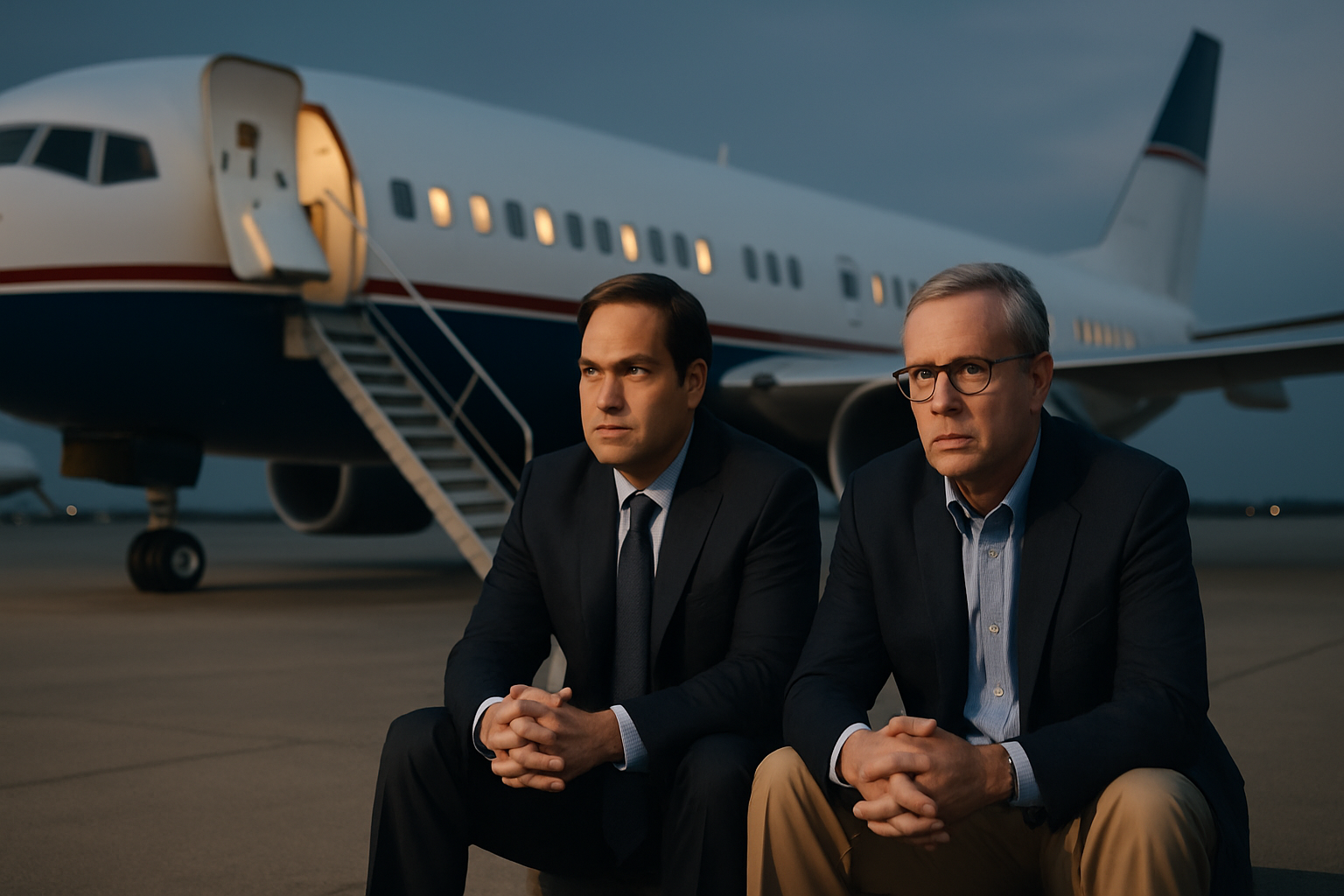
Two members of US President Donald Trump’s cabinet remained aboard a decoy aircraft after he quietly left it and travelled from Turkey on another military plane, according to CBS News.
Secretary of State Marco Rubio and Treasury Secretary Scott Bessent were among those who stayed on the first aircraft after Trump boarded it in Ankara on 8 July, alongside press members and other officials. Trump was then reportedly moved secretly in a catering truck to a separate military aircraft amid security concerns involving Iran.
The presidential call sign, Air Force One, applies to whichever aircraft is carrying the president. In this case, the original aircraft retained the designation and served as the decoy while Trump departed on the second plane.
CBS reported that Rubio and Bessent remained on the first plane to preserve the line of succession should anything happen to Trump. Vice-President JD Vance would be next to assume power if the president died or became incapacitated, followed by the Speaker of the House of Representatives, the President Pro Tempore of the Senate, the secretary of state and then the treasury secretary.
White House Deputy Chief of Staff Stephen Miller and communications director Steven Cheung were also reported to have remained on the decoy plane. US media reports said Defence Secretary Pete Hegseth was among those travelling on the aircraft that carried Trump from Ankara.
Trump told reporters on Monday night that the military and Secret Service had decided he should use a different aircraft. He did not give details about the potential threat, saying he faced many threats.
It remains unclear what the cabinet officials, other personnel and Air Force members on the initial plane knew about the operation. Reporters travelling on the aircraft have said they were unaware they were on a decoy flight. It is also not known whether the people aboard that aircraft faced any danger during the trip.
Such security deceptions, sometimes described by Secret Service personnel as “shell games”, are common in presidential travel. The source notes that more extensive measures are often used for higher-risk overseas journeys, including a 2000 trip to Islamabad by then-President Bill Clinton that involved a decoy aircraft.
Source: BBC News
