

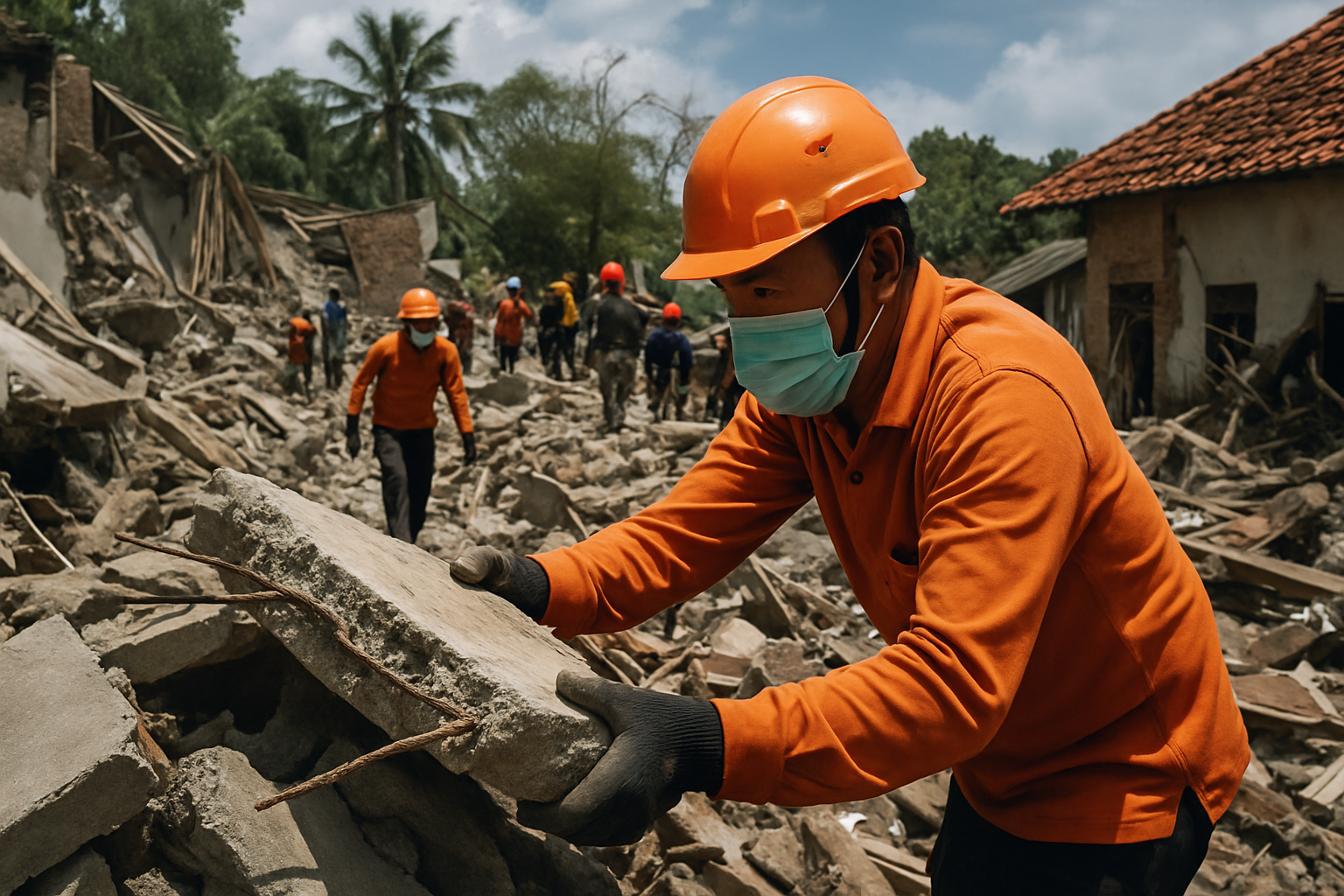
At least 38 people have been killed after a 7.7-magnitude earthquake struck Indonesia’s eastern island of Flores early on Saturday, according to the country’s disaster mitigation agency, BNPB.
Search and rescue efforts are under way as authorities assess damage in the remote, mountainous region. The reported death toll has risen since the earthquake, while several people have also been injured, BNPB said.
The earthquake struck shortly before 05:00 local time on Saturday, or 22:00 GMT on Friday. Indonesia’s meteorology and geophysics agency said the quake was at a depth of 15km. A series of aftershocks followed, including one measured at magnitude 6.1.
Damage and evacuations
Buildings were damaged by the main quake and subsequent tremors. Preliminary reports indicated that 54 homes were severely damaged, along with five healthcare facilities, three places of worship, six government buildings, an educational institution and a warehouse. BNPB identified Manggarai province as among the worst-affected areas.
Video from the port at Maumere showed concrete falling from a terminal building onto passengers waiting for an inter-island ferry. Some people were thrown into the sea after a gangway to a vessel collapsed.
East Nusa Tenggara Governor Emanuel Melkiades Laka Lena said some victims had died while sleeping when rubble from collapsed structures fell on them. BNPB separately reported fatalities in Sikka, Manggarai and East Manggarai provinces, and said at least two people had sustained serious injuries while 11 others were slightly injured.
A tsunami warning was issued after the earthquake, prompting people to move inland on motorbikes. It was lifted around three hours later after no significant increase in sea level was detected. BNPB said about 2,000 people had evacuated or moved independently.
Residents remain outside
Arnold Welianto, a resident of Talibura village near the coast in Sikka, said the shaking woke him and that many residents had gone to nearby hills. He said the sea had receded for a period, causing panic among people who fled, including those at a local community health centre.
Some residents have remained outdoors because they fear further aftershocks. Yulian Juita Ekalia, a university lecturer in Ruteng, said she had moved her stove outside to cook rather than return indoors. Authorities have urged people to stay calm and avoid coastal areas and buildings showing signs of damage while assessments continue.
Source: BBC News
