

Malaria continues to pose a life-threatening danger for pregnant women in sub-Saharan Africa, often causing miscarriage, stillbirth, low birthweight and severe illness.
Now, an EU-funded international research effort aims to protect women before they become pregnant — a strategy that could transform maternal and newborn health in regions where malaria remains endemic.
Dr. Flavia D’Alessio, who leads vaccine research at the European Vaccine Initiative (EVI) in Heidelberg, Germany, coordinates the five-year ADVANCE-VAC4PM project, which runs until 2027. She explains the thinking behind the approach.
“When a woman becomes pregnant for the first time, she is particularly vulnerable to malaria,” she says. “The parasite infects red blood cells that can accumulate in the placenta, leading to very serious consequences for both mother and baby.”
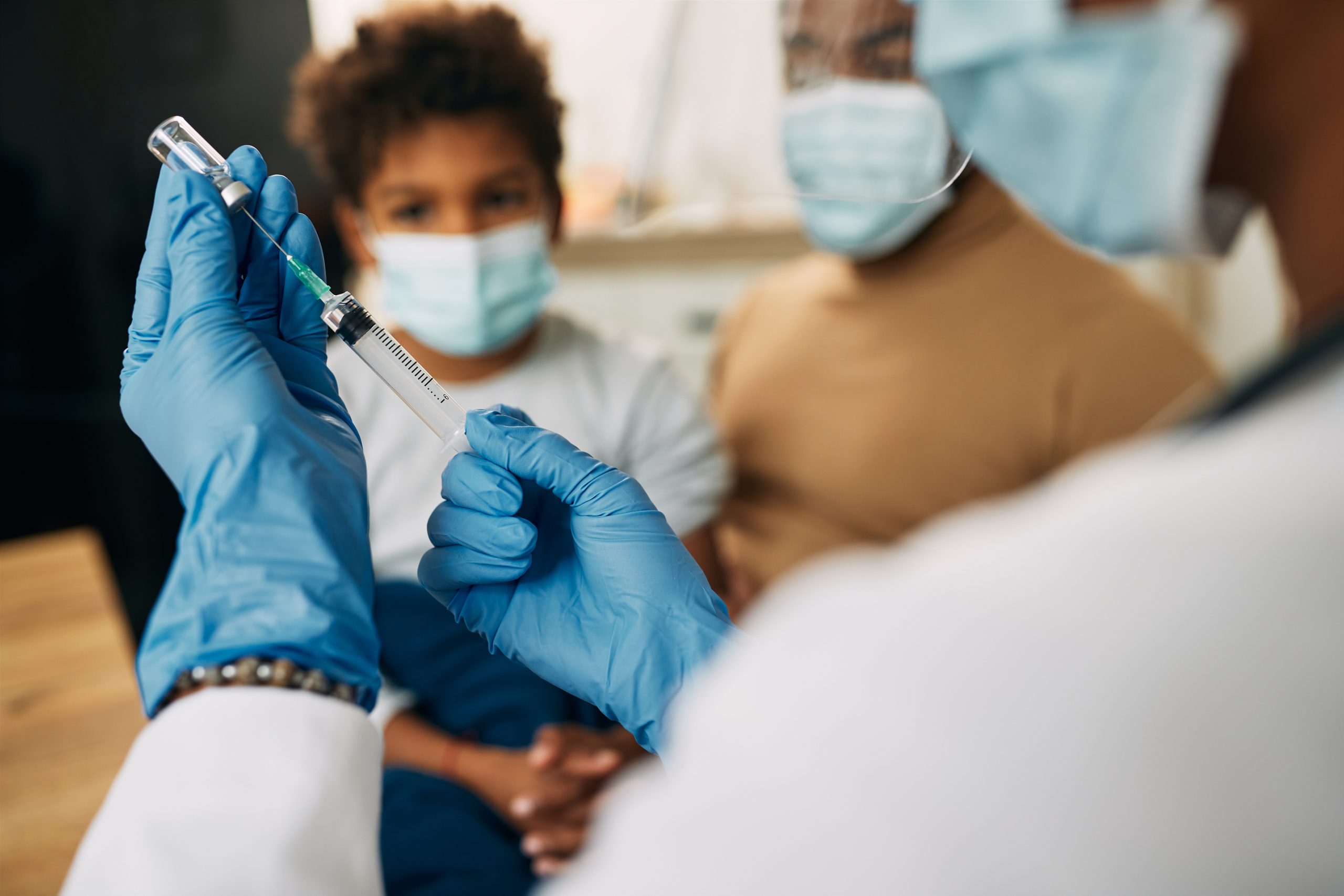
The goal is to develop a vaccine for adolescent girls who have not yet been pregnant. Much like the HPV vaccine administered to teenagers to prevent cervical cancer, this would provide long-lasting protection for women once they reach childbearing age.
Human impact
The potential benefits are enormous. According to the World Health Organization (WHO), malaria during pregnancy contributes to between 75,000 and 200,000 infant deaths annually and more than 800,000 cases of low birthweight.
Placental malaria can also increase the risk of anaemia and high blood pressure in mothers, especially during a first pregnancy.
“When a woman becomes pregnant for the first time, she is particularly vulnerable to malaria.”
— Dr. Flavia D’Alessio, ADVANCE-VAC4PM
The vaccines under development target VAR2CSA — a malaria parasite protein that enables infected red blood cells to bind to placental tissue. Blocking this protein may not stop infection altogether, but it could prevent the most dangerous outcomes for mothers and babies.
Two candidates are currently advancing: PAMVAC, developed by the University of Copenhagen, and PRIMVAC, created by the French National Institute of Health and Medical Research (INSERM). Both focus on similar regions of the same protein.
To improve effectiveness, researchers are testing virus-like particles — non-infectious structures resembling viruses — to trigger stronger immune responses. They are also exploring whether combining PRIMVAC with a virus-like particle version of PAMVAC could offer broader protection.
Early progress
Initial trials have been encouraging: both vaccine candidates have proven safe, well tolerated and capable of eliciting strong immune responses.
The next critical step is determining whether these immune responses translate into real-world protection. Researchers will monitor vaccinated women from the time they receive the vaccine through their first pregnancy and birth, measuring whether they experience fewer cases of placental malaria compared with unvaccinated women.
“We need to follow women through this entire period to demonstrate protection,” D’Alessio explains.
If successful, the vaccines will proceed through further regulatory evaluation, WHO prequalification and, eventually, large-scale production and distribution.
International collaboration
The ADVANCE-VAC4PM consortium brings together 10 leading institutions from Europe and Africa with extensive expertise in malaria vaccine development. Key partners include research teams from France, Denmark, the Netherlands, Ghana, Malawi, Burkina Faso and Benin.
EVI coordinates the effort as part of its mission to accelerate safe, effective and affordable vaccines for diseases that disproportionately impact low- and middle-income countries.
This work builds on previous research on PAMVAC and PRIMVAC — also led by EVI and supported by the Japan-based Global Health Innovation Technology Fund — highlighting the global nature of this collaboration.
Trials in Africa
In Burkina Faso, preparations are underway for field trials led by Professor Sodiomon Sirima and his team at Groupe de Recherche Action en Santé in Ouagadougou.
Earlier studies vaccinated non-pregnant women with no prior pregnancies, showing strong immune responses. The next phase aims to understand whether that protection persists once participants become sexually active and later pregnant.
Depending on how many women conceive during the study, this phase could take up to two years.
“The goal is to find a vaccine that is safe and generates long-lasting protective immunity,” Sirima says. “If vaccinated women have fewer miscarriages, stillbirths and low-weight babies, it will be a tremendous achievement for the vaccine and for the malaria research community as a whole.”
“The goal is to find a vaccine that is safe and generates a long-lasting protective immune response.”
— Professor Sodiomon Sirima, ADVANCE-VAC4PM
Working alongside existing prevention tools
If approved, the vaccine would complement existing malaria prevention strategies, such as insecticide-treated bed nets and intermittent preventive treatment in pregnancy (IPTp), a monthly medication recommended by WHO.
IPTp has been shown to reduce perinatal mortality by around 27% among first- and second-time mothers. But access is inconsistent in rural areas, resistance to the drug is rising, and it cannot be taken during the first trimester — precisely when women are most vulnerable.
“This is another reason why a vaccine is urgently needed,” D’Alessio emphasises.
Beyond clinical development, the ADVANCE-VAC4PM team is committed to building long-term capacity — supporting postgraduate training, mentoring early-career African researchers, strengthening laboratory infrastructure and developing digital tools for tracking pregnancy outcomes. Researchers will also use modelling to assess cost-effectiveness, feasibility and community acceptability.
Looking ahead
Progress toward a vaccine for placental malaria is gradual, but momentum is accelerating. With two promising candidates, coordinated trials across continents and strong support from European and African partners, the prospect of protecting mothers and babies from one of malaria’s most devastating complications is closer than ever.
If successful, such a vaccine could prevent thousands of maternal and infant deaths each year — giving families across Africa safer pregnancies, healthier newborns and renewed hope in the continuing fight against one of the world’s deadliest diseases.
Research in this article was funded by the EU’s Horizon Programme. The views of interviewees do not necessarily reflect those of the European Commission. If you found this article valuable, consider sharing it on social media.
