

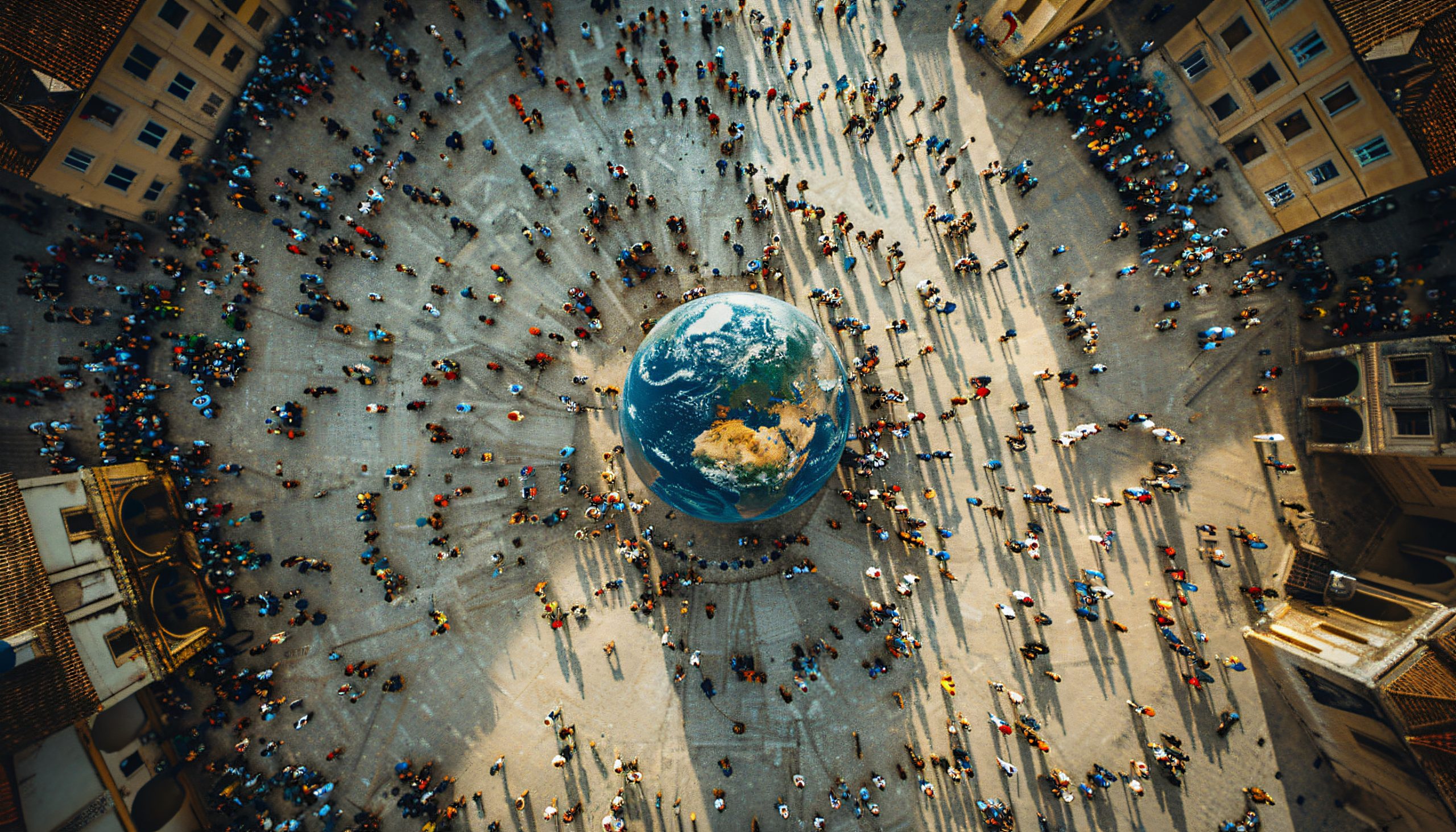
Over 80% of the World’s Population Now Lives in Urban Areas, Says UN Report
More than 80% of the global population now resides in urban areas, according to a recent United Nations report, with this figure expected to rise further in the coming decades. This trend underscores the growing need for cities to be developed in ways that promote both human health and environmental sustainability.
The latest edition of the World Urbanisation Prospects report, published in 2018, initially suggested that 55% of the world’s population lived in urban areas. However, that estimate was based on the widely varying definitions of what constitutes an „urban” or „rural” settlement across countries. For example, while Denmark classifies areas with as few as 200 residents as urban, Japan’s threshold is 50,000. To provide a clearer picture, researchers from the UN in New York, led by Sara Hertog, used a standardized definition. Urban areas were defined as cities with at least 50,000 inhabitants, a density of 1,500 people per square kilometer, or towns with at least 5,000 people and a density of 300 people per square kilometer.
The researchers analyzed satellite and national survey data from 237 countries to estimate the extent of urbanization worldwide in 2025. Their findings revealed that 45% of the global population currently resides in cities, with another 36% living in towns. In total, 81% of people worldwide are urban dwellers, leaving just 19% in rural areas.
Looking ahead, the study predicts that by 2050, 83% of the global population will live in urban regions. The number of people in both towns and cities is expected to continue rising, while the rural population is anticipated to peak in the 2040s, mostly due to the growth in the Democratic Republic of the Congo, before declining thereafter. These updated figures will help the UN track progress toward its 11th Sustainable Development Goal, which seeks to „make cities and human settlements inclusive, safe, resilient, and sustainable” by 2030.
Drivers of Urban Growth
The factors driving urban population growth vary across regions. In Eastern and Southern Asia, migration from rural to urban areas is the main driver, as people move in search of better educational and employment opportunities, as well as a more vibrant social life. In Europe and North America, international migration plays a more significant role. Meanwhile, in sub-Saharan Africa, population growth is primarily driven by higher birth rates than death rates.
The Environmental and Health Impacts of Urbanisation
While urbanisation can bring economic benefits, it also poses challenges for both the environment and public health. For instance, as cities expand due to population growth, inadequate public transport planning can lead to urban sprawl, which increases reliance on cars and subsequently raises carbon emissions. However, well-planned cities with efficient public transportation systems can have a far smaller carbon footprint than rural areas, offering environmental benefits.
Urbanisation also has mixed effects on health. On the one hand, cities expose residents to higher levels of air pollution and extreme heat, both of which have been linked to worse cardiovascular health and an increased risk of conditions such as Alzheimer’s disease. Additionally, limited green space in some urban areas is associated with higher levels of anxiety and depression.
On the other hand, urban living can bring numerous health benefits. Cities typically have more responsive healthcare systems, and residents have greater access to comprehensive medical services compared to rural areas. Moreover, urban areas offer greater opportunities for social connection, where individuals are more likely to find like-minded people than in more isolated rural settings.
The Need for Greener Cities
While the report does not suggest reversing urbanisation, it emphasizes the urgency of making cities more livable. Experts argue that urban planning must prioritize green spaces, public health, and sustainability to ensure that the growing urban population enjoys the benefits of city life without the environmental and health drawbacks.
Professor Andrea Mechelli of King’s College London points out that while urbanisation brings challenges, it also offers solutions — particularly through improved healthcare and social integration. “What the report tells us is that it’s now more urgent than ever to think about how to make our cities more livable, and that means making them greener,” Mechelli says.
