

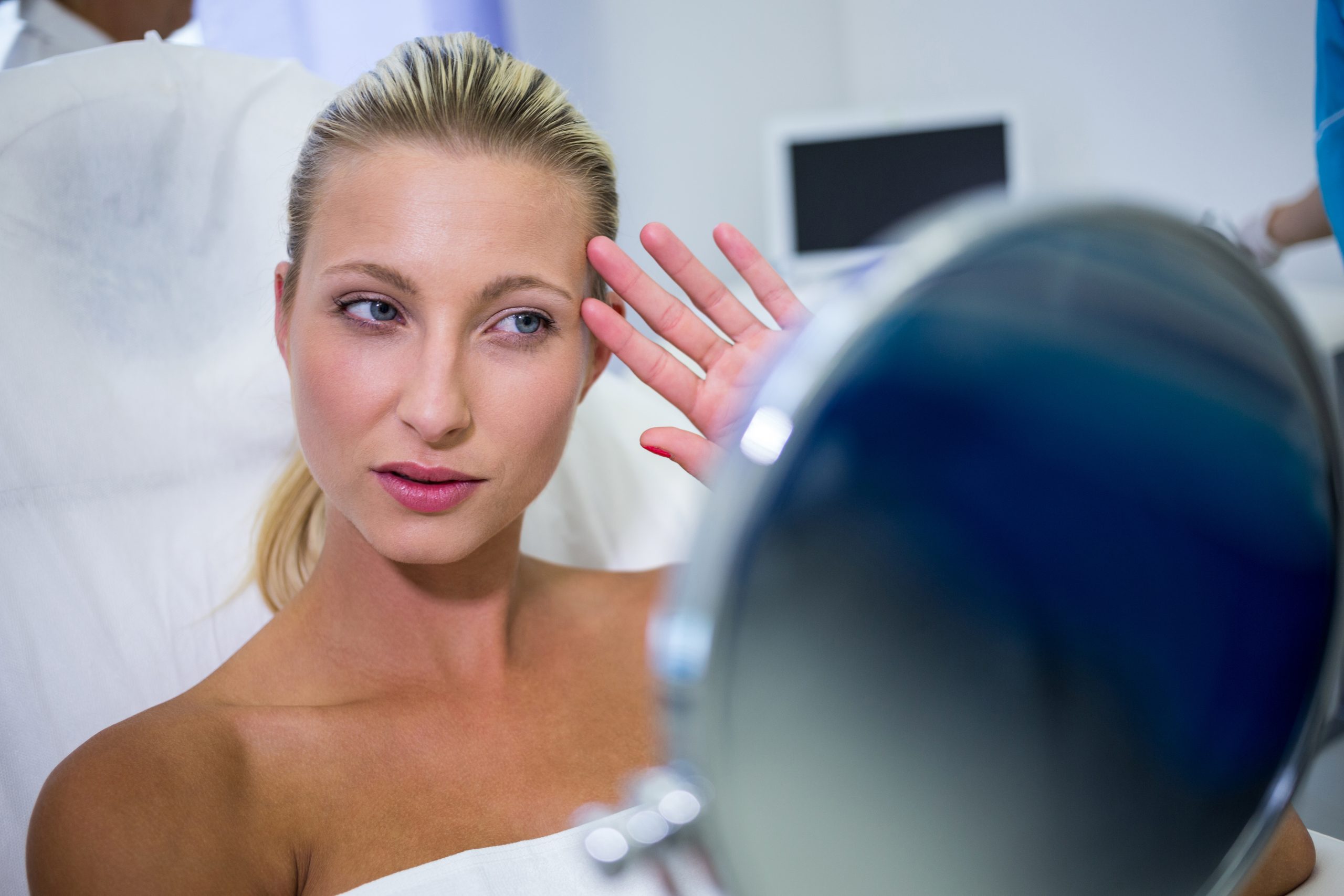
People considering cosmetic facial fillers should be clearly informed about a potentially serious complication: blocked arteries that can cut off blood supply, leading to skin damage and, in severe cases, blindness, experts have warned.
The alert follows a study in which researchers used ultrasound imaging to analyse 100 cases where filler injections had resulted in medical problems. Based on these findings, clinics are now being urged to perform pre-procedure ultrasound scans to map facial arteries and avoid accidental injury.
Lead researcher Dr Rosa Sigrist explains that although these “vascular occlusions” are relatively rare, their consequences can be severe. If filler is injected into, or too close to, an artery, it can stop blood flow, causing tissue death and lasting facial deformity unless treated promptly.
Facial fillers – widely used to soften wrinkles, add volume or reshape features such as the nose and lips – carry particular risk in the nasal area, Dr Sigrist notes. This is because blood vessels in and around the nose connect to critical structures in the head. Damage here can lead to skin necrosis, blindness, or even stroke.
Dr Sigrist’s team at the University of São Paulo reviewed complication cases from radiology centres in Brazil, Colombia and Chile, along with data from the Netherlands and the United States. The study, covering May 2022 to April 2025, will be presented at the Radiological Society of North America’s annual meeting.
Their scans revealed that in nearly half of cases, blood flow was missing in the smaller vessels that link superficial and deeper arteries. In one-third of the patients, major vessels themselves showed no blood flow.
To reduce such risks, Dr Sigrist recommends routine ultrasound-based planning before injections. While the British Association of Aesthetic Plastic Surgeons (BAAPS) reports that ultrasound use is becoming more common, it is not yet standard practice.
BAAPS president Nora Nugent says ultrasound is proving extremely useful across surgical and aesthetic procedures, as mapping blood vessel locations gives clinicians vital information before treatment. She adds that these risks underline why BAAPS has long called for stronger regulation of aesthetic treatments and limiting injectable procedures to medically trained professionals.
The UK government has announced plans to introduce tighter controls on cosmetic procedures. Under the proposals, only “suitably qualified” healthcare providers would be allowed to perform high-risk treatments, such as Brazilian butt lifts, while clinics offering fillers or Botox would need licences and must meet strict standards. A public consultation on which procedures should be regulated will open in early 2026 before going to Parliament.
Ultrasound can also play a crucial role when complications occur. Without imaging, clinicians must rely solely on external symptoms and inject treatment blindly. With ultrasound guidance, however, they can pinpoint the exact location of the blockage.
Instead of flooding the area with large doses of hyaluronidase, the enzyme used to dissolve filler, doctors can deliver smaller, targeted injections directly into the problem site — a method that Dr Sigrist says leads to better, more efficient outcomes.
