

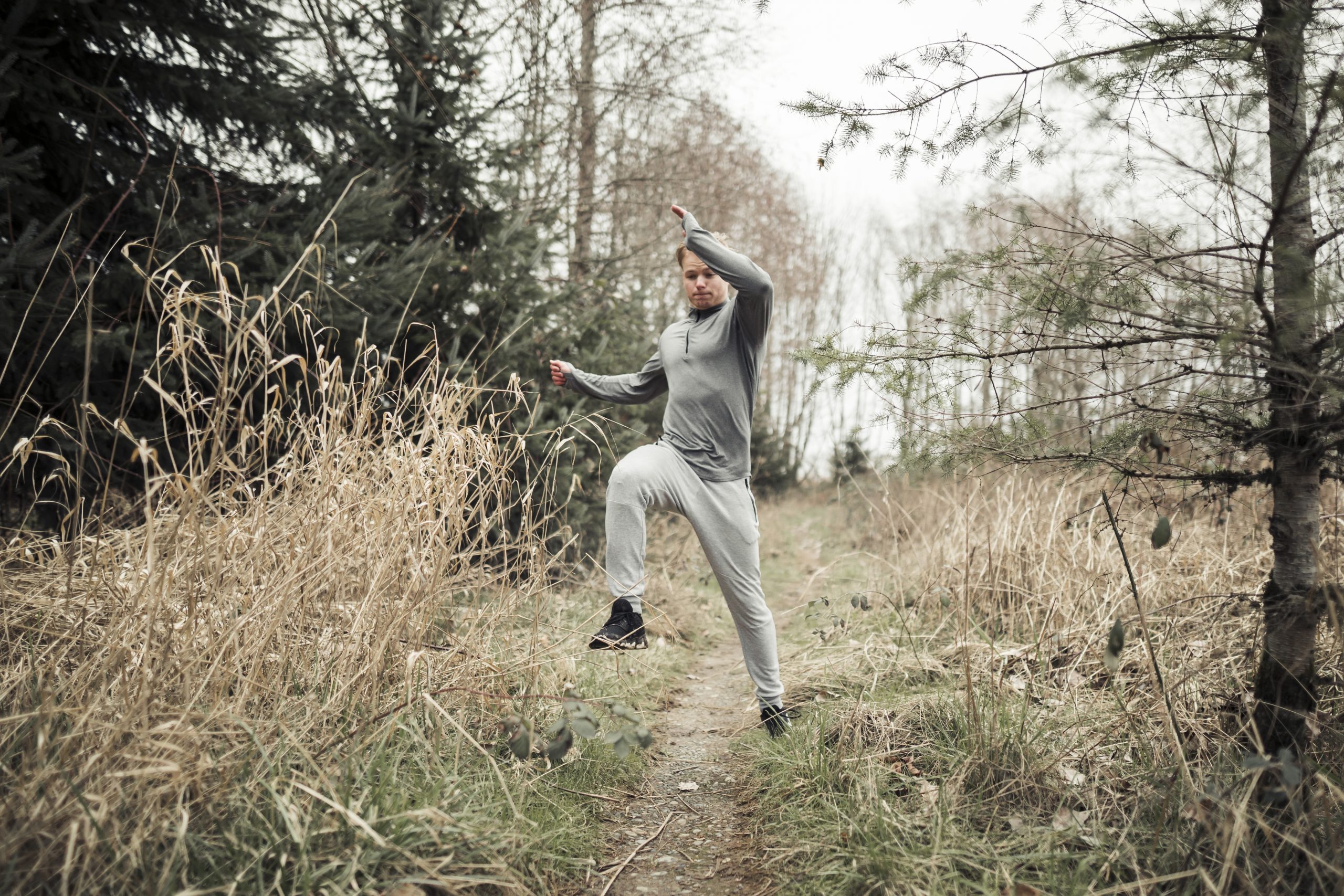
From sprinting up the stairs to tackling gardening with extra energy — everyday movements done with more intensity may be enough to boost your health and even help you live longer.
Most people know that regular exercise and a healthy diet are key to longevity. But many struggle to find time for gym sessions or reach 10,000 steps a day. New research suggests you may not need to. Short, vigorous bursts embedded into your daily routine could bring substantial benefits.
This approach has a name: vigorous intermittent lifestyle physical activity, or VILPA. Also called “exercise snacking,” “snacktivity,” or “activity microbursts,” VILPA has emerged as a promising way to encourage people who rarely exercise to move more without changing their daily schedules.
Turning everyday movement into heart-boosting activity
VILPA can be thought of as a scaled-down version of high-intensity interval training (HIIT). Instead of structured workouts, it focuses on moments of everyday movement performed with extra effort — running for the bus, power-walking at home, or playing energetically with kids or pets. Even one- or two-minute bursts that raise your heart rate count.
Mark Hamer, professor of sport and exercise medicine at University College London, says the concept originated when researchers analysed data from people who did no formal exercise but still accumulated surprising levels of vigorous movement in daily life — such as fast stair climbing or brisk commuting.
“Much of this movement occurred in very short chunks,” Hamer explained. These “microbursts” were unexpectedly linked to major health benefits.
Just a few minutes can lower risk of early death
In a 2022 study of more than 25,000 adults in the UK, researchers from UCL and the University of Sydney found that just three to four one-minute bursts of VILPA a day were associated with:
- 40% lower risk of premature death, and
- 49% lower risk of dying from cardiovascular disease,
compared with people who barely moved at all.
Another recent study suggests that roughly four minutes of VILPA per day may offset some of the heart-related risks of a sedentary lifestyle.
This is especially significant because most adults over 40 do not exercise regularly. The WHO estimates that 1.8 billion adults worldwide fail to meet recommended activity levels.
Why microbursts work for so many people
According to behavioural medicine expert Amanda Daley from Loughborough University, VILPA’s greatest strength is accessibility.
“It only requires a few minutes at a time, a few times a day,” she says. “That makes it easy, inexpensive, and realistic for people with busy lives.”
Examples of VILPA include:
- Running upstairs instead of walking
- Power-walking while doing household chores
- Playing fast-paced games with children or pets
- Carrying heavy shopping bags
- Mixing short sprints into a normal walk
Cardiologist Shigenori Ito in Japan says these actions can also help build strength, especially in legs and joints.
A new rule: anything is better than nothing
VILPA fits a growing consensus among researchers that every bit of movement counts — even if it falls far short of traditional fitness targets.
While the popular goal of 10,000 steps a day remains widely known, new studies show meaningful improvements at much lower step counts. For example:
- 2,500–2,700 steps a day can reduce heart disease risk by about 11%
- Anything beyond 2,200 steps a day lowers the risk of heart disease and early death
“Something is better than nothing,” says Rana Hinman, professor of physiotherapy at the University of Melbourne. Even people with chronic joint pain, she says, can see improvement from small increases in movement.
A practical path to healthier living
Researchers say VILPA offers a realistic solution for today’s increasingly sedentary world, where many people sit for long periods at work and cities are designed around cars, not pedestrians.
By adding short bursts of effort into everyday routines, people can improve heart health, reduce chronic disease risk, and even stave off age-related frailty — all without needing gym memberships or lengthy workouts.
Sometimes, the simplest movement — a quick climb, a fast-paced walk, a burst of play — may be enough to add years to your life.
