

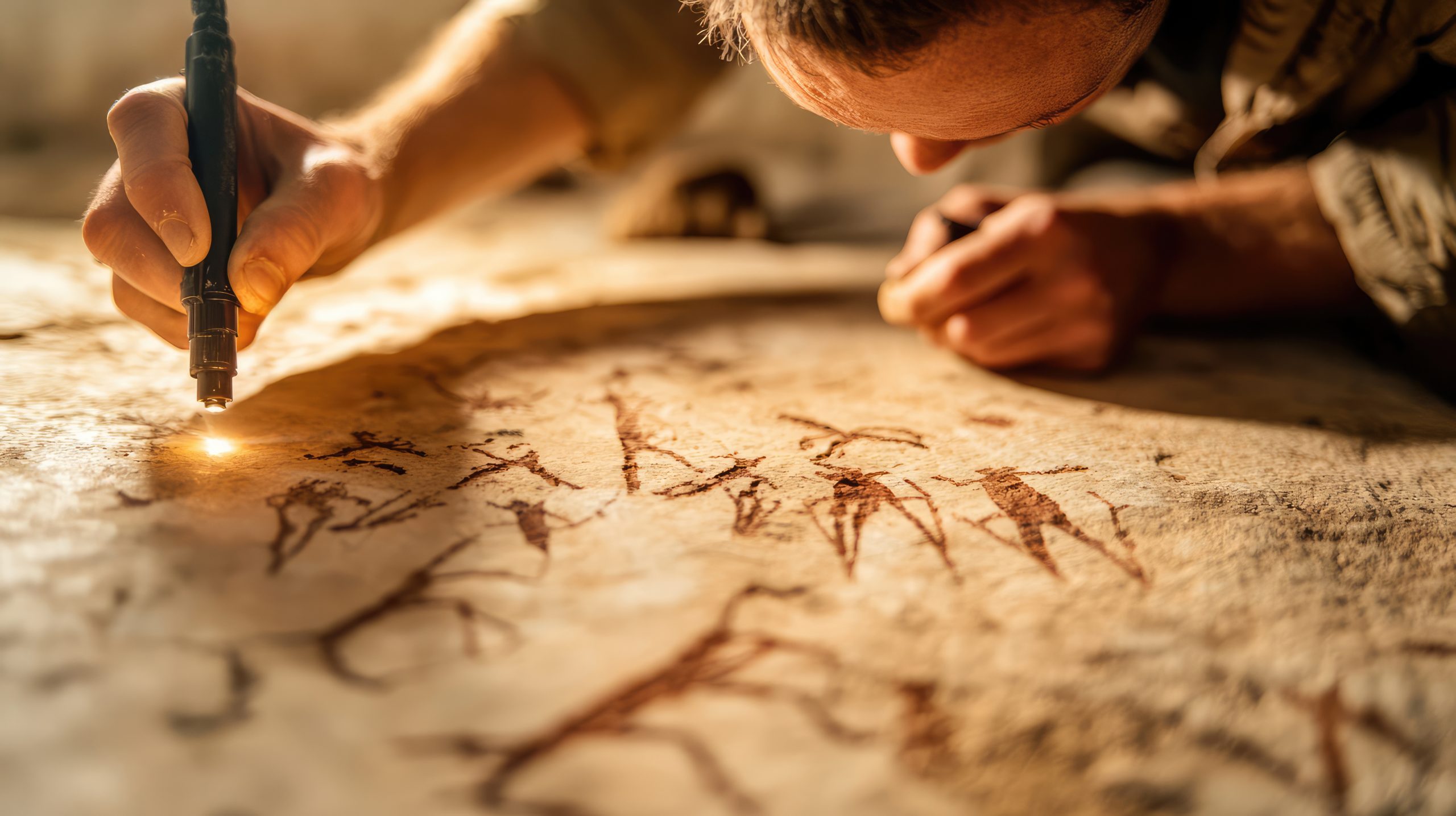
Recent discoveries across Africa, the Middle East, and Asia are challenging long-held assumptions about the origins of early human civilization. Using advanced technology and interdisciplinary research methods, historians and archaeologists are uncovering evidence that suggests ancient societies were far more interconnected, sophisticated, and dynamic than previously understood.
Africa’s Early Urban Centers Gain Recognition
For decades, historical narratives underrepresented Africa’s ancient cities. New excavations supported by the University of the Witwatersrand have revealed large, complex settlements in southern Africa that predate some classical Mediterranean cities.
Stone structures, trade networks, and agricultural systems uncovered in regions such as Mapungubwe and Great Zimbabwe indicate that advanced state-building and long-distance commerce flourished independently — correcting colonial-era myths that Africa lacked early urban development.
Middle Eastern Discoveries Rewrite Early Empire Timelines
Recent fieldwork in Iraq, Turkey, and Iran is reshaping understanding of early Mesopotamian and Anatolian societies. Archaeologists connected to the Oriental Institute of the University of Chicago have uncovered administrative tablets, irrigation channels, and urban planning features suggesting that early city-states emerged earlier and in more locations than previously documented.
These findings challenge the idea of a single “cradle of civilization” and instead support a model of multiple, evolving centers of innovation.
China’s Bronze Age Expands Beyond Traditional Borders
New research from the Institute of Archaeology, Chinese Academy of Social Sciences indicates that China’s early bronze-age cultures were interconnected across vast distances. Recently discovered ceremonial vessels and burial sites suggest robust cultural exchange between the Yellow River, Yangtze, and southwestern regions.
Historians say this expands the known scope of early Chinese civilization, showing a mosaic of interacting cultures rather than a single dominant origin.
The Americas Reveal Richer Pre-Columbian Histories
Advances in LiDAR scanning have transformed research on Indigenous societies in Central and South America. Newly mapped cities hidden beneath rainforest canopies reveal extensive road systems, irrigation networks, and architectural complexes.
Archaeologists collaborating with the National Institute of Anthropology and History have identified settlement patterns suggesting population levels once thought impossible, challenging outdated misconceptions about the Americas before European contact.
Ancient Trade Networks Were Vast and Intercontinental
Chemical analysis, isotope tracing, and ancient-DNA studies show that long-distance trade networks were thriving thousands of years earlier than once believed. Materials such as obsidian, lapis lazuli, spices, and metals traveled from Central Asia to the Mediterranean, from East Africa to the Arabian Peninsula, and from the Andes to Mesoamerica.
This evidence supports growing consensus among historians that ancient globalization — though slower — was far more extensive than classical narratives suggested.
Technology Becomes a Time Machine
Modern tools are enabling unprecedented insights. AI-assisted text reconstruction, satellite imaging, and 3D modeling allow researchers to analyze damaged manuscripts, detect buried structures, and simulate ancient environments.
Historical research groups emphasize that these technologies, combined with Indigenous knowledge and community-led archaeology, are creating a more inclusive and accurate picture of the past.
A New Era for Historical Understanding
Experts say the ongoing shift in historical research is not simply correcting old timelines — it is transforming how humanity understands its collective story. As forgotten civilizations re-emerge through scientific and cultural collaboration, history is becoming less Eurocentric and more globally interconnected.
The past, historians argue, is proving far richer, more diverse, and more innovative than long assumed — and the discoveries now unfolding may redefine human history for generations to come.
