

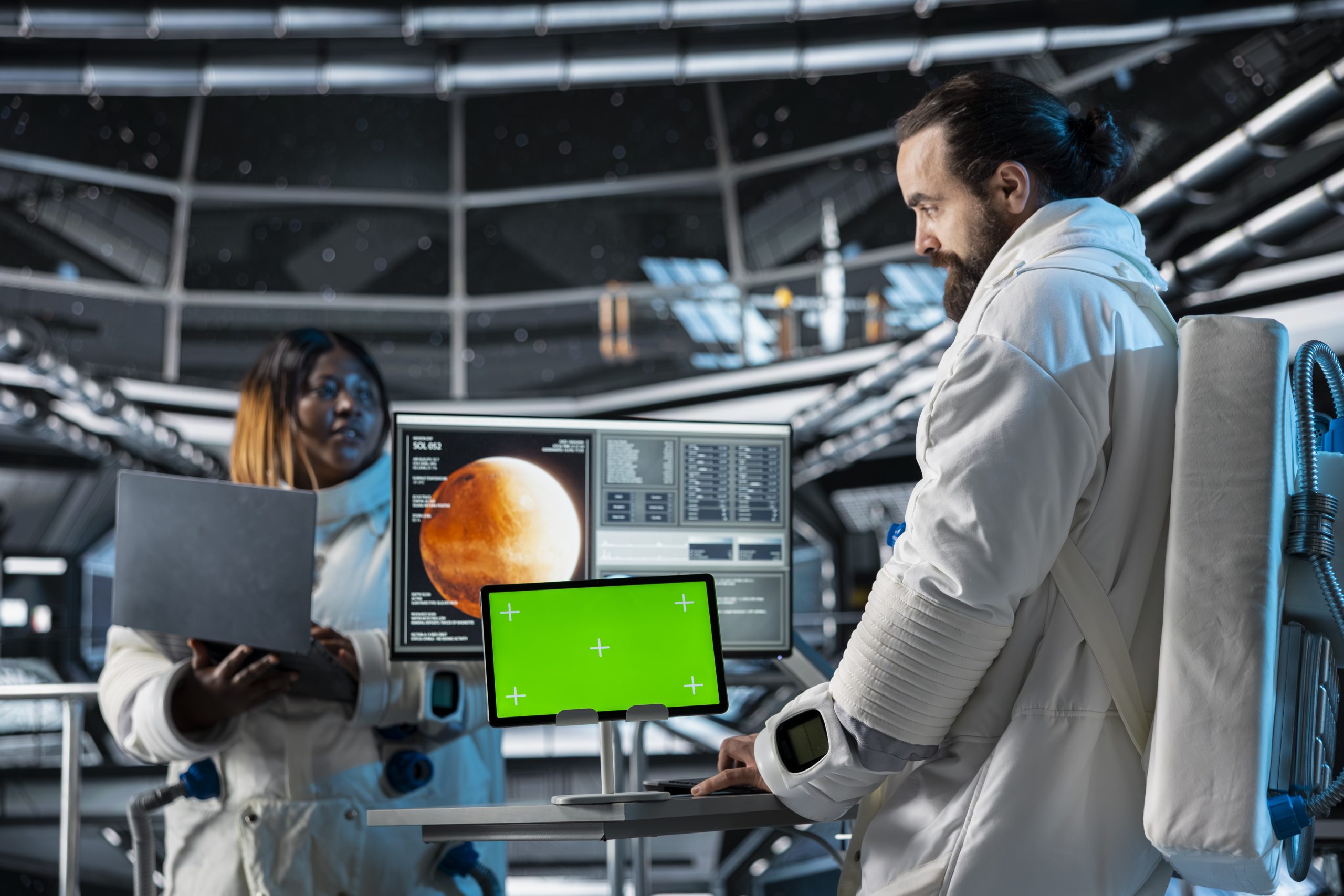
Innovation in 2026 is redefining the foundations of global industry. The most important developments are not consumer-facing but embedded deep within supply chains, energy systems and industrial infrastructure.
The convergence of advanced automation, renewable energy technologies and new computing architectures is triggering the largest industrial transformation since the late 20th century.
Automation shifts from optional to essential
Labour shortages, rising costs and complex global logistics have made automation a necessity rather than an enhancement.
Manufacturers across North America, Europe and East Asia are deploying collaborative robots, autonomous vehicles and AI-driven assembly systems. Industrial platforms built by companies such as Siemens and ABB now form the backbone of advanced factories.
Automation is not eliminating employment; it is reshaping it. Demand surges for technicians, data analysts and systems integrators capable of operating blended human–machine environments.
Energy innovation restructures geopolitical influence
Energy technology is redefining global economic power.
The sharp decline in renewable energy costs, combined with advances in grid-scale storage, has shifted investment away from fossil fuels. The countries most aggressively investing in clean energy infrastructure—such as China, Germany and United States—are positioning themselves for long-term industrial advantage.
Green hydrogen, advanced nuclear reactors and high-efficiency solar technologies are no longer experimental. They are entering deployment phases that will define energy security for decades.
Quantum computing enters applied research
Quantum computing remains pre-commercial, but its influence on research is accelerating. Companies like D-Wave Systems and research divisions within IBM have demonstrated early proof-of-value for optimisation, materials simulation and cryptographic analysis.
Hybrid quantum–classical computing models are emerging as practical tools in pharmaceuticals, logistics and advanced materials research.
Quantum’s immediate value lies not in raw power, but in its ability to tackle specific high-complexity problems previously beyond classical computation.
Supply chains become technological ecosystems
Modern supply chains rely on sensor networks, AI forecasting, digital twins and autonomous logistics. Real-time tracking, predictive analytics and automated inventory systems reduce vulnerability to disruption.
What emerged out of necessity during the pandemic has become standard industrial practice in 2026.
The complexity of modern supply chains demands continuous, data-driven adaptation rather than static planning.
The reindustrialisation of advanced economies
Countries that previously outsourced manufacturing are re-establishing domestic production for strategic sectors such as semiconductors, pharmaceuticals and renewable energy components.
The trend is visible in the United States, where large-scale semiconductor plants receive federal support, and in the Japan, which is investing in advanced robotics to revitalise high-tech manufacturing.
This reindustrialisation is driven by security concerns, supply chain resilience and the desire to maintain technological sovereignty.
Innovation becomes embedded in the landscape
The most significant innovations of 2026 are not visible to consumers. They reside in data centres, power grids, automated factories and research labs. They shape industrial policy, labour markets and economic strategy.
The next technological era will not be defined by devices, but by the systems that sustain nations.
In that sense, innovation is no longer merely a driver of growth.
It is the architecture of global resilience.
