

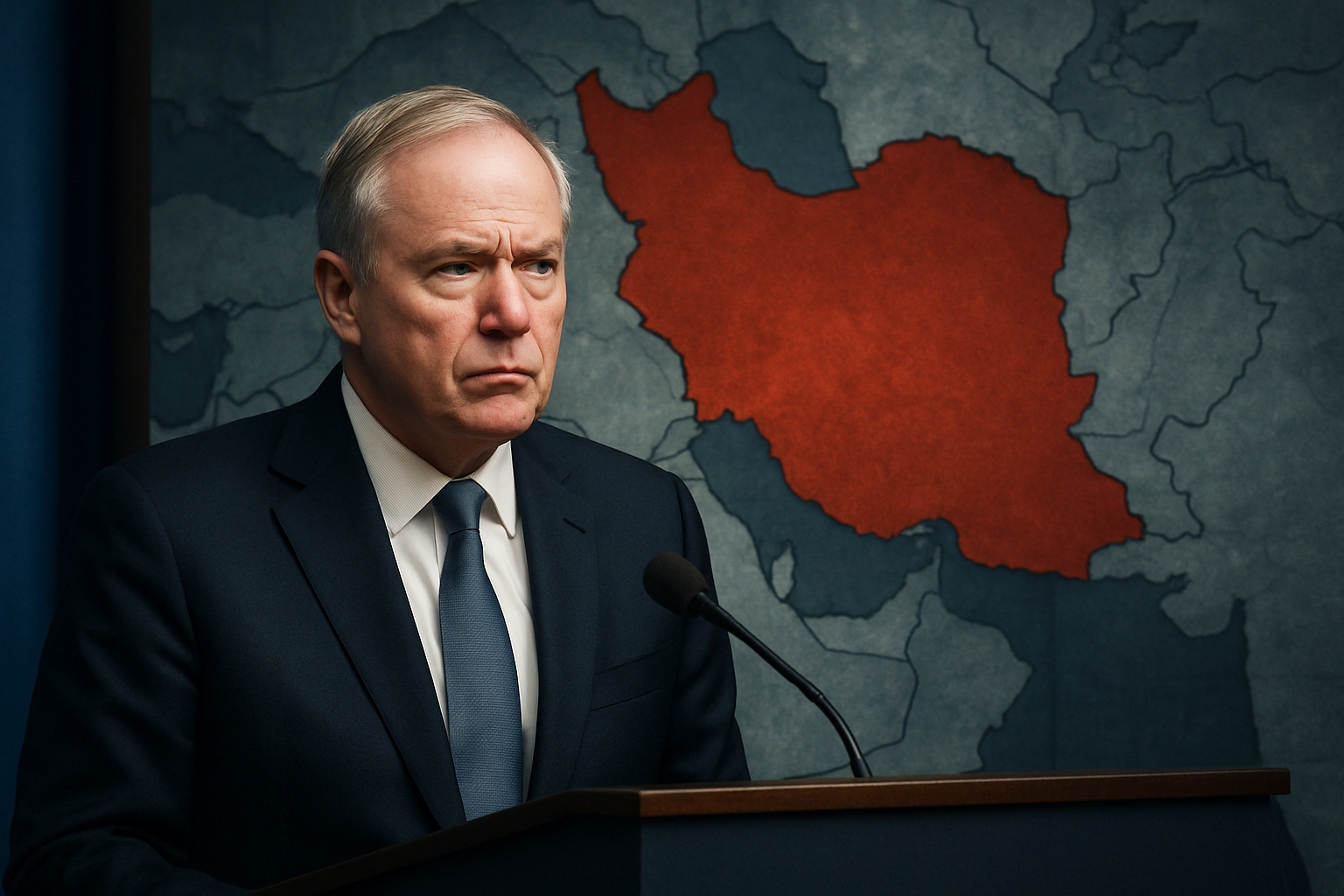
US Treasury Secretary Scott Bessent has said Washington is preparing what he called an unprecedented financial campaign against Iran, as the US-Israel war with the country continues.
In an opinion article for the Financial Times, Bessent said the United States intended to cut off Iran’s economic connections and isolate any country that maintained financial partnerships with Tehran. He described the effort as an “economic D-Day” and said the conflict was entering its endgame.
Bessent wrote that the US objective was to remove the economic support sustaining Iran’s ruling authorities until Tehran was left isolated. However, he did not set out the specific measures that would form part of the proposed financial pressure.
He was expected to provide further details during a news conference in the United States at 13:00 local time on Monday, or 18:00 BST.
Iran issues oil and shipping warnings
Iran rejected Bessent’s comments and said it would halt all oil exports from the region if the war continued, Reuters reported. The Iranian authorities also issued a new warning to shipping, saying vessels should not pass through the Strait of Hormuz without permission, according to the news agency.
The Strait of Hormuz, south of Iran, is normally used for around one-fifth of global oil and gas flows. The route has been effectively blocked by Iran since the conflict began at the end of February, the report said.
Higher oil prices linked to the war have added to cost-of-living concerns in the US and elsewhere. US gasoline prices have risen above $4 a gallon, while Brent crude, the international benchmark, stood at $93 a barrel on Monday. Affordability has become a leading concern for US voters ahead of November’s mid-term elections.
Previous sanctions and policy shifts
Iran is already subject to extensive US economic sanctions. A 2015 agreement reached under former President Barack Obama and several US allies had removed many sanctions in exchange for limits on Iran’s nuclear programme. President Donald Trump withdrew from that agreement in 2018, calling it defective, and restored US sanctions.
Efforts during Joe Biden’s presidency to revive the earlier agreement did not succeed. In April, the Trump administration imposed sanctions on foreign banks and companies doing business with Tehran after concluding that military operations had not forced Iran’s government to surrender.
The latest threat follows earlier changes in the administration’s approach during the war, including extended deadlines and previous warnings. In April, Trump said a deal was needed to end the conflict and reopen the Strait of Hormuz, but the US later stepped back from that position after Pakistan intervened as a mediator and called for more diplomacy.
Source: BBC News
