

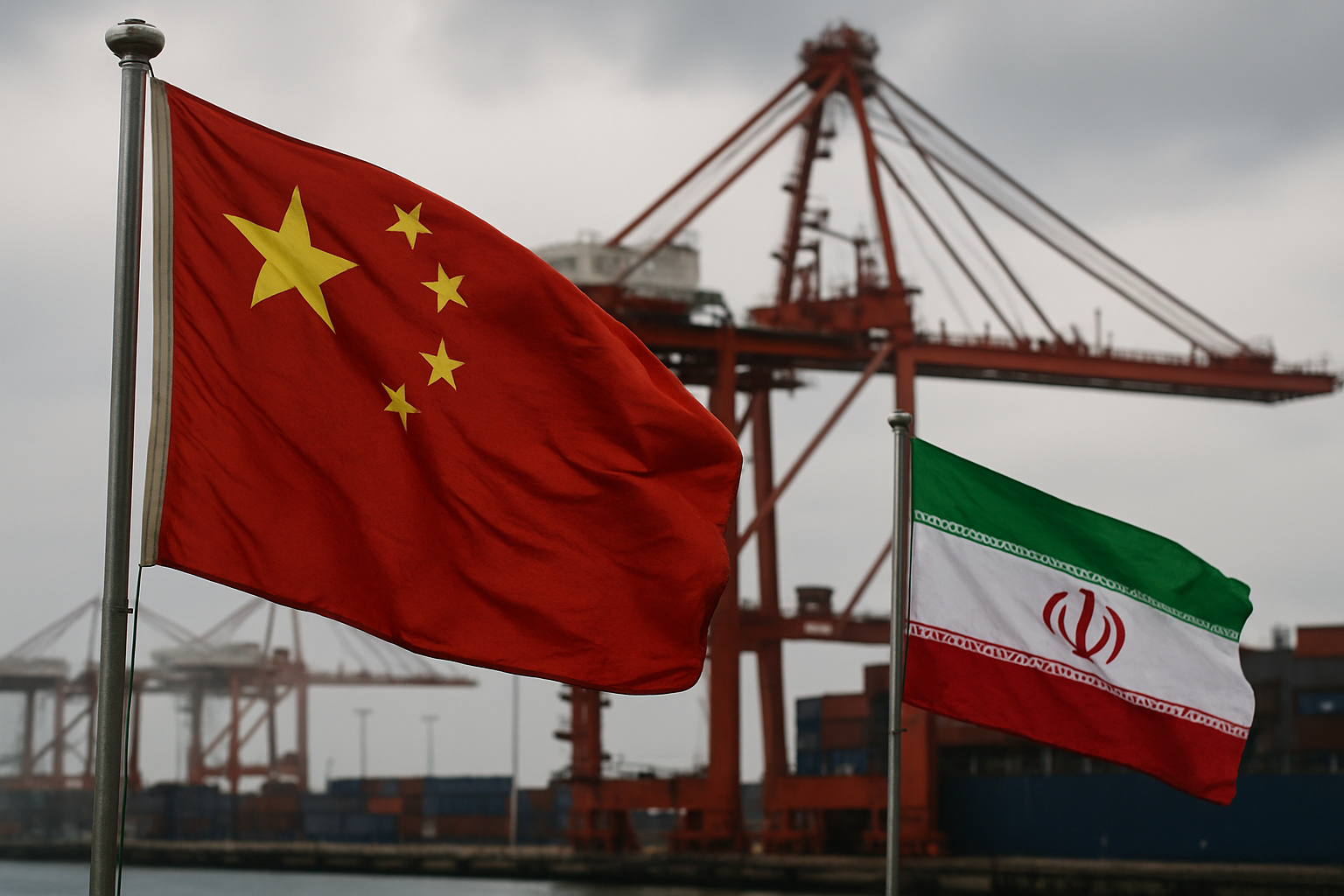
China has said it will take steps to protect its interests after the United States announced plans to broaden economic sanctions against Iran and countries that maintain financial links with Tehran.
Foreign Ministry spokesman Lin Jian said Beijing firmly opposed what it described as illegal unilateral sanctions. He said trade and other cooperation between China and Iran had been conducted within international law and should not be disrupted by outside pressure.
The US announcement was made by Treasury Secretary Scott Bessent, who said Washington would seek to isolate countries, banks and businesses that continued financial dealings with Iran. Bessent called the campaign the most significant financial action yet taken against Iranian revenue sources and said President Donald Trump would contact world leaders with requests to end interactions with the Iranian government.
While Bessent did not initially name individual countries, he said no institution was beyond the reach of US sanctions when asked about Chinese banks. China is Iran’s largest oil customer, though trade has fallen under the US blockade of Iranian ports.
Concerns over trade and possible retaliation
The sanctions announcement comes before planned talks next month between Trump and Chinese President Xi Jinping. The report said Washington may be cautious about possible Chinese retaliation because Beijing processes most of the world’s rare earths and other critical minerals used in high-technology manufacturing. China has previously tightened rare-earth export controls during trade negotiations with the United States.
Iranian Economy Minister Ali Madanizadeh said Tehran was fully prepared for the broader restrictions and had a two-year plan to manage their effects. He said Iran had anticipated the measures and had tools to respond.
Washington has named its latest sanctions effort Operation Economic Outcast. The US Treasury said it had identified channels, facilitators and networks used by Iran to evade sanctions and trade oil, imposing restrictions on nearly 60 entities, people and vessels.
Some analysts questioned how much the new package would immediately reduce Iran’s energy income. David Oxley of Capital Economics said the direct effect on Iranian oil flows could be limited in the short term, partly because he estimated that about 90% of Iran’s oil is sold to China. Ali Vaez of the International Crisis Group said China has historically regarded unilateral US sanctions as illegitimate, although it would comply with multilateral international sanctions.
The measures were announced nearly six months after the start of the Iran war. The conflict has pushed up global oil prices, while Iran has effectively blocked exports through the Strait of Hormuz and the United States has slowed traffic through its naval blockade. Diplomatic efforts have not produced a settlement, and a 60-day ceasefire expired last week. India and Russia, also identified as trade partners that could be affected, had not responded at the time of the report.
Source: BBC News
