

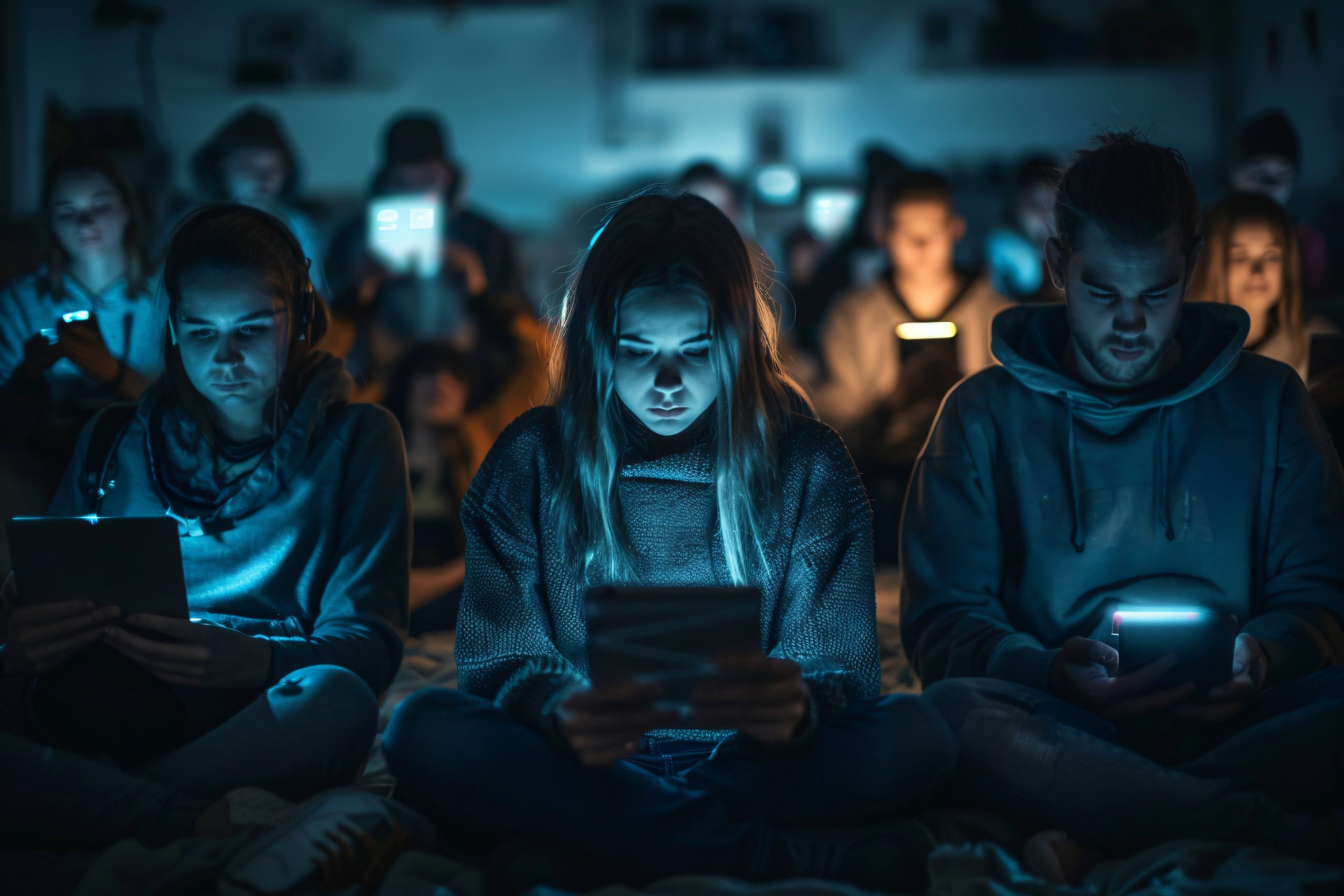
As smartphones, laptops, streaming platforms, and social media continue to dominate daily life, people across the world are reporting rising levels of what experts now call “digital fatigue.” Researchers say society may be approaching a turning point in its relationship with technology.
Recent studies from universities in the US, South Korea, and Europe have found that average screen time has climbed to over seven hours per day for adults — the highest level ever recorded. For teenagers, that number is even higher, with many spending up to nine or ten hours between schoolwork, entertainment, and social apps.
Mental health concerns intensify
Psychologists warn that prolonged screen exposure is increasingly linked to anxiety, poor sleep, and reduced attention span. Dr. Angela Ruiz, a behavioral scientist at the University of Madrid, says digital overload is contributing to “a widespread sense of mental exhaustion.”
“People aren’t just tired physically — they’re cognitively drained,” she explains. “Constant notifications and digital multitasking overwhelm the brain’s ability to rest.”
Healthcare providers in several countries say they’re seeing a rise in patients seeking help for burnout-like symptoms, even among those who are not overworked in the traditional sense.
Young people feeling the impact the most
Teenagers and young adults, who rely heavily on online communication, are particularly vulnerable. Surveys show that many feel pressured to stay constantly connected — not wanting to miss updates, group chats, or social trends.
One 17-year-old student in Canada told researchers, “I know I’m online too much, but everything happens there — homework, friends, my hobbies. It’s impossible to disconnect without falling behind.”
Teachers also report that digital distraction in classrooms has surged, even in schools that restrict phone use.
Work-life boundaries continue to blur
Remote and hybrid work, once seen as a relief from traditional office life, has added to screen-related stress for many employees. Virtual meetings now fill schedules, and workers often feel pressure to respond to messages outside working hours.
A global survey conducted this year found that one in three remote workers struggles to switch off after the workday ends, leading to higher rates of burnout.
“People are technically at home, but mentally they never leave the office,” says Dr. Ruiz.
Companies respond as productivity declines
Some employers are beginning to notice that digital overload can hurt efficiency. Several European companies have introduced policies restricting after-hours emails, capping meeting lengths, or designating “no-screen afternoons” to help reduce stress.
Countries such as France and Portugal have already enacted “right to disconnect” laws, giving workers legal protection against after-hours digital demands. Experts say more nations may adopt similar measures as workplace norms evolve.
A growing movement toward ‘digital minimalism’
At the same time, a cultural shift is emerging as individuals seek healthier balances. Digital-free weekends, phone-free dining spaces, and “quiet” social events where screens are discouraged have become more popular in cities around the world.
Libraries and community centers are organizing technology breaks, and therapists are advising patients to schedule regular offline activities such as walking, reading, or face-to-face socializing.
“The goal isn’t to reject technology,” says Dr. Ruiz, “but to use it intentionally, rather than automatically.”
The future of digital life
Experts predict that society will not abandon its devices — but may move toward smarter, more mindful use. As awareness grows, tech companies are also under pressure to design less addictive features and improve user well-being tools.
For now, digital fatigue remains a widespread challenge, touching nearly every age group and region. How society responds to it may shape the next phase of our technological era.
