

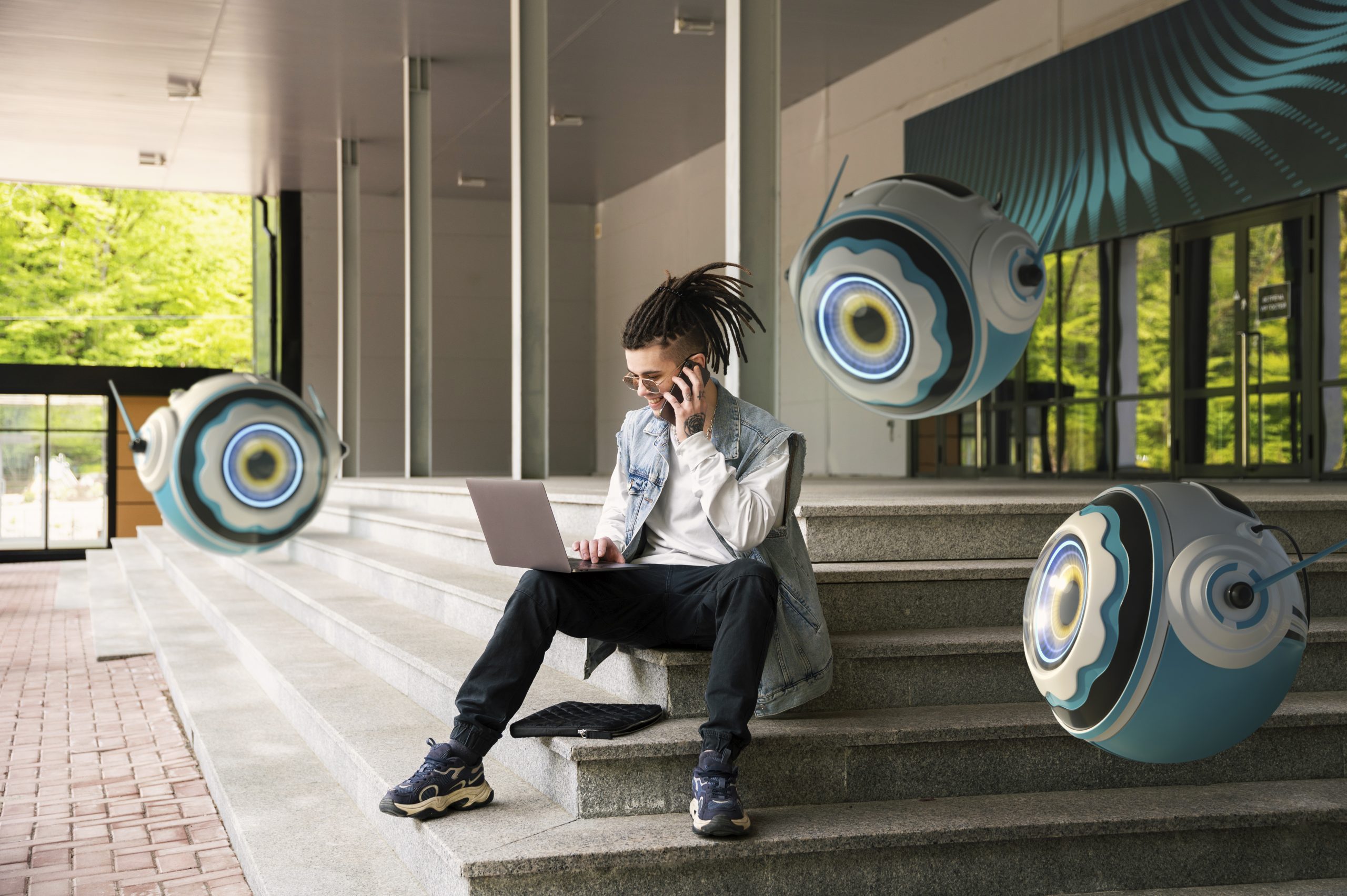
The future of work is no longer a distant idea discussed in policy papers and tech conferences. It is beginning to take shape now — but in a fragmented, uneasy way, with companies embracing artificial intelligence while still struggling to define what human work should look like alongside it.
That tension is becoming clearer across the technology sector. Reuters reported this week that Microsoft has reorganised its Copilot teams to speed up adoption of its AI assistant and free more leadership attention for what it describes as a “superintelligence” push. The move reflects a wider industry pattern: AI is no longer being treated as an experimental feature, but as the foundation of future software products and workplace systems.
In China, that same shift is taking a more aggressive form. Reuters reported that both Baidu and Alibaba are making large bets on AI agents — systems designed to carry out multi-step tasks across apps, devices and services rather than simply answer prompts. Baidu unveiled a suite of so-called “AI agents” that can handle research, editing and smart-device tasks, while Alibaba is restructuring parts of its AI strategy around agents that can operate across its e-commerce, logistics and cloud ecosystem. The implication is hard to miss: the next stage of workplace automation may not be a chatbot on a screen, but software that can actively perform digital labour.
Yet the human consequences are already visible. Reuters reported earlier this month that Atlassian would cut about 10% of its workforce as it pivots toward AI, while Reuters also reported that Meta is planning sweeping layoffs as the cost of its AI infrastructure climbs. These decisions suggest that, for many companies, the future of work is not simply about productivity gains. It is also about reallocating money, power and headcount around new technical priorities.
At the same time, the jobs market is not moving in only one direction. Reuters reported that the European Central Bank cited evidence suggesting AI may be creating jobs for now in the euro zone, even as fears of white-collar displacement grow. Another Reuters report highlighted the rapid rise of “forward deployed engineers” — hybrid technical staff who help businesses actually integrate AI into messy real-world systems. That points to a future in which some roles disappear, but others expand precisely because companies need people who can manage, deploy and supervise increasingly capable tools.
The result is a more complicated future than either the optimists or pessimists often describe. AI is not simply replacing workers wholesale, nor is it quietly slotting into offices without disruption. Instead, it is redrawing the boundaries of work unevenly across sectors, firms and countries.
What comes next may depend less on the technology itself than on how institutions respond. If employers use AI mainly to cut labour costs, the transition could deepen insecurity and mistrust. If they invest in retraining, redesign and new forms of human oversight, the workplace of the future may end up looking less like an automated purge and more like a negotiated transformation.
For now, though, the future of work has a recognisable shape: more AI, fewer certainties, and a growing divide between companies that are building the next system and workers still waiting to learn where they fit inside it.
