

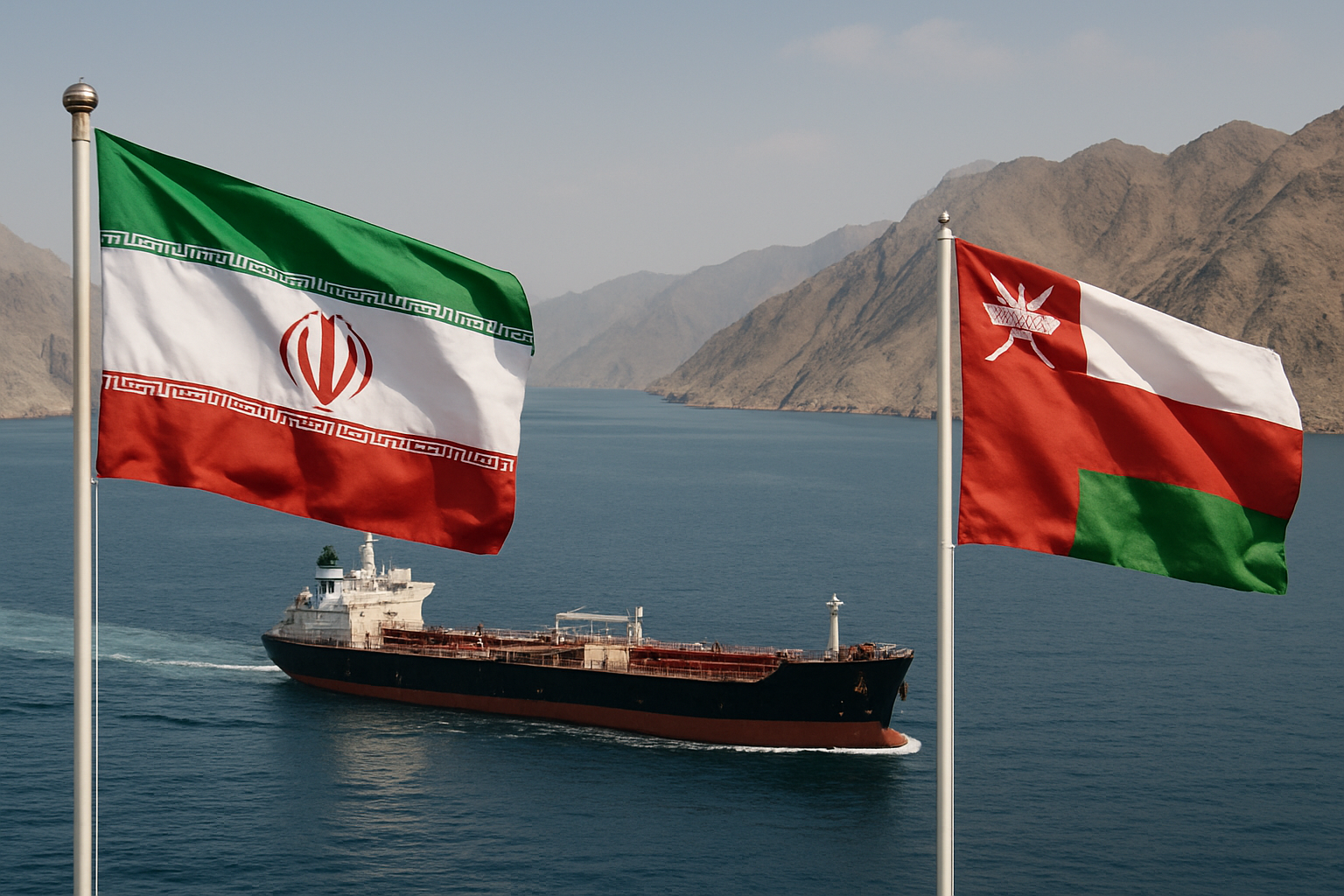
Iran says it has agreed with Oman on the geographical coordinates of a shipping route through the Strait of Hormuz, with the arrangement now in its final stages. Tehran gave no detailed description of the proposed corridor, and neither Oman nor the United States has publicly commented on it.
Iranian Foreign Ministry spokesman Esmaeil Baqaei said the agreement would not by itself ensure safe passage through the strategic waterway. He said that, in Iran’s view, security in the strait continued to be affected by the US naval blockade of Iranian ports and other actions Tehran described as threatening.
Deputy Foreign Minister Kazem Gharibabadi later told Iran’s state-run Irna news agency that the proposed route would be temporary and could remain open for between two and four months. He did not provide further information on its location, the terms for vessels using it, or when it could begin operating.
Dispute over transit terms
The Strait of Hormuz normally carries about a fifth of global oil and liquefied natural gas shipments. Traffic has sharply declined since the conflict began after US and Israeli attacks on Iran in February. Iran has said vessels must receive clearance before transiting the strait and has attacked ships that did not follow that instruction.
Talks involving Iran, the United States and mediators have focused heavily on reopening the route. President Donald Trump said on Tuesday that Iran would be „hit very hard” if the strait did not reopen soon. Senior US officials have said discussions had advanced enough that shipments could potentially resume later in the week, although Iran has said it is not negotiating with Washington and does not intend to do so.
One continuing disagreement concerns a proposed Iranian charge on ships crossing the strait. Reuters, citing a senior Iranian official, reported that Tehran was seeking fees equal to 5% to 7% of the value of cargoes. Oman was discussing charges of about 3%, while the United States wanted vessels to pass without fees, according to the report. Reuters also reported that the proposed agreement would give Tehran control over ships entering the Gulf through the waterway.
Oil prices have been volatile during the conflict as transit through the strait has been disrupted. Brent crude was down 0.3% at $79.24 a barrel in morning Asian trading on Thursday. A June memorandum of understanding between Iran and the United States had sought to halt fighting, reopen the strait and reach a wider agreement within 60 days, but it collapsed within days as reciprocal attacks resumed.
The United States continues to maintain a naval blockade of Iranian ports in the region. Separately, Yemen’s Iran-backed Houthis have imposed a blockade on Saudi Arabian ports in the Red Sea since 20 July, according to the report.
Source: BBC News
