

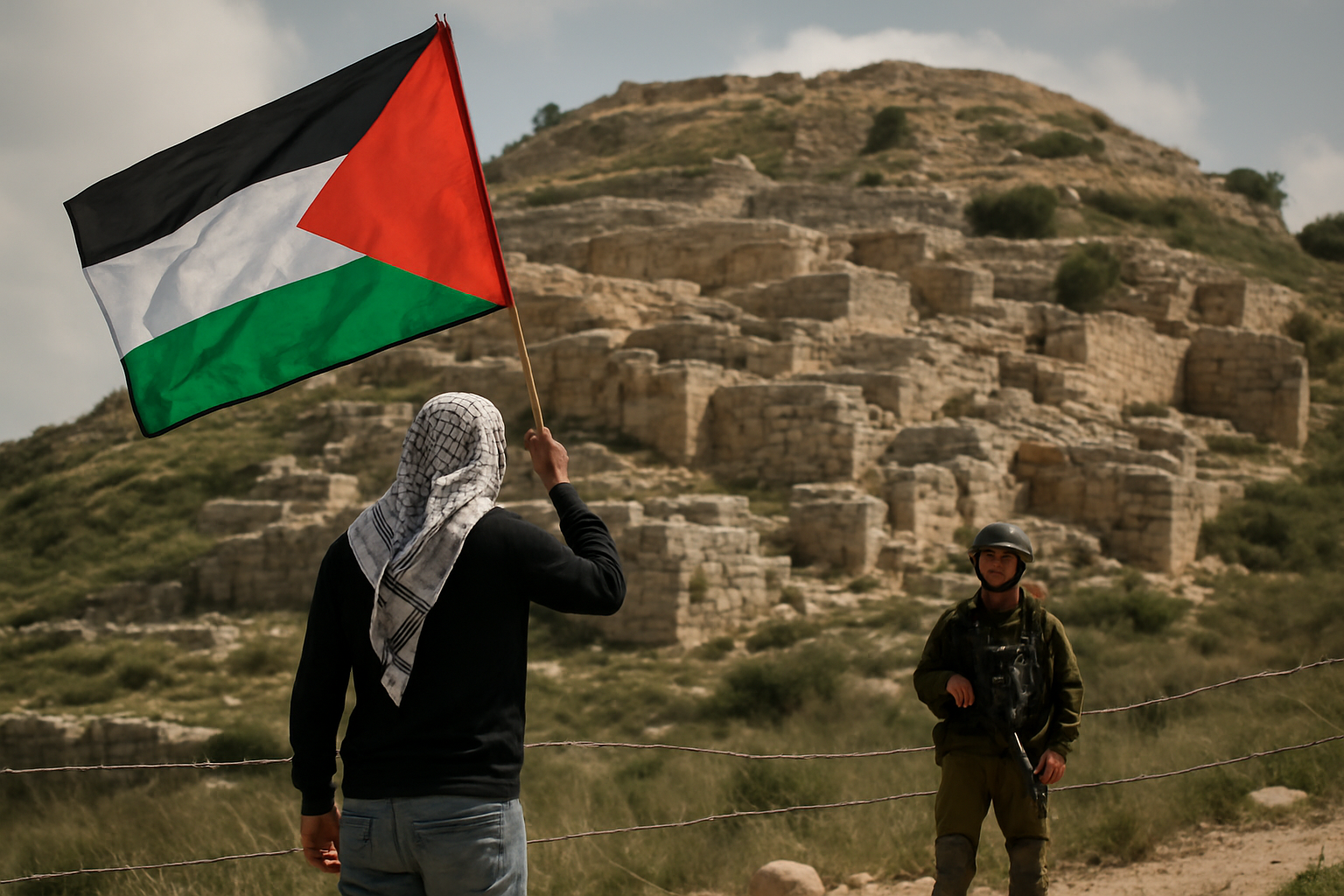
Israeli plans to take possession of land around major archaeological sites in the occupied West Bank have prompted objections from Palestinian residents, local officials and advocacy groups, who say the measures could restrict Palestinian access and strengthen Israeli control over the areas.
At Sebastia, Israeli authorities have notified landowners that about 450 acres are to be expropriated for the protection and development of a proposed Samaria, or Shomron, national park. The land includes olive fields cultivated for generations by Palestinian families, according to residents.
Abu Mudif, a landowner whose property is included in the planned expropriation, said the loss would affect both his income and his connection to the land. Palestinian owners generally receive little or no compensation in such cases, the report said, and many refuse payment because they see acceptance as legitimising the loss.
Nahed Sakha, who owns a restaurant facing possible demolition, said restoration and excavation work had begun and that landowners had been told they would no longer be permitted to use or plough their land. He said residents believed the plans would separate the village from the ancient site, which contains remains from Jewish, Roman, Crusader and Ottoman periods.
Unesco warning and competing accounts
Unesco added Sebastia to its World Heritage List on 25 July through an emergency procedure and also placed it on the List of World Heritage in Danger. The agency said its principal concern was the proposed expropriation and establishment of the national park, which it said could divide the property.
The site spans parts of Areas B and C of the West Bank. Area B is under Palestinian civil control and Israeli security control, while Area C is under full Israeli civil and security control. Israel allocated about 113 million shekels, or £27.8m, last week to expand its control over archaeological sites in the West Bank, including projects in areas administered by the Palestinian Authority.
Alon Arad of the Israeli group Emek Shaveh said authorities had bypassed consultation with Sebastia’s municipality and residents. He argued that archaeological development should involve the local community so it can benefit from the site. Israeli plans would move Sebastia’s entrance to the opposite side of the site, away from the village, its current car park and shops.
Israeli Foreign Minister Gideon Saar said Unesco’s decision enabled Palestinian attempts to diminish historical Jewish links to the West Bank, stating that no international vote could alter history.
Herodium expropriation
Israel has also begun expropriating about 80 acres at Herodium, a hilltop palace built by King Herod near Bethlehem, citing the site’s preservation and development. Peace Now, an Israeli organisation monitoring settlements, said Israeli and international legal standards prohibit land expropriation for settlement purposes or solely for Israeli citizens’ benefit.
Shmuel Browns, a guide who has worked on excavations at Herodium, said Israel considered itself responsible for protecting the archaeology, artefacts and history of the land. Earlier this year, a proposed law that would have given the Israeli heritage ministry broad powers over archaeological sites and land seizures in the West Bank passed a first parliamentary reading, but is now on hold ahead of elections.
Source: BBC News
