

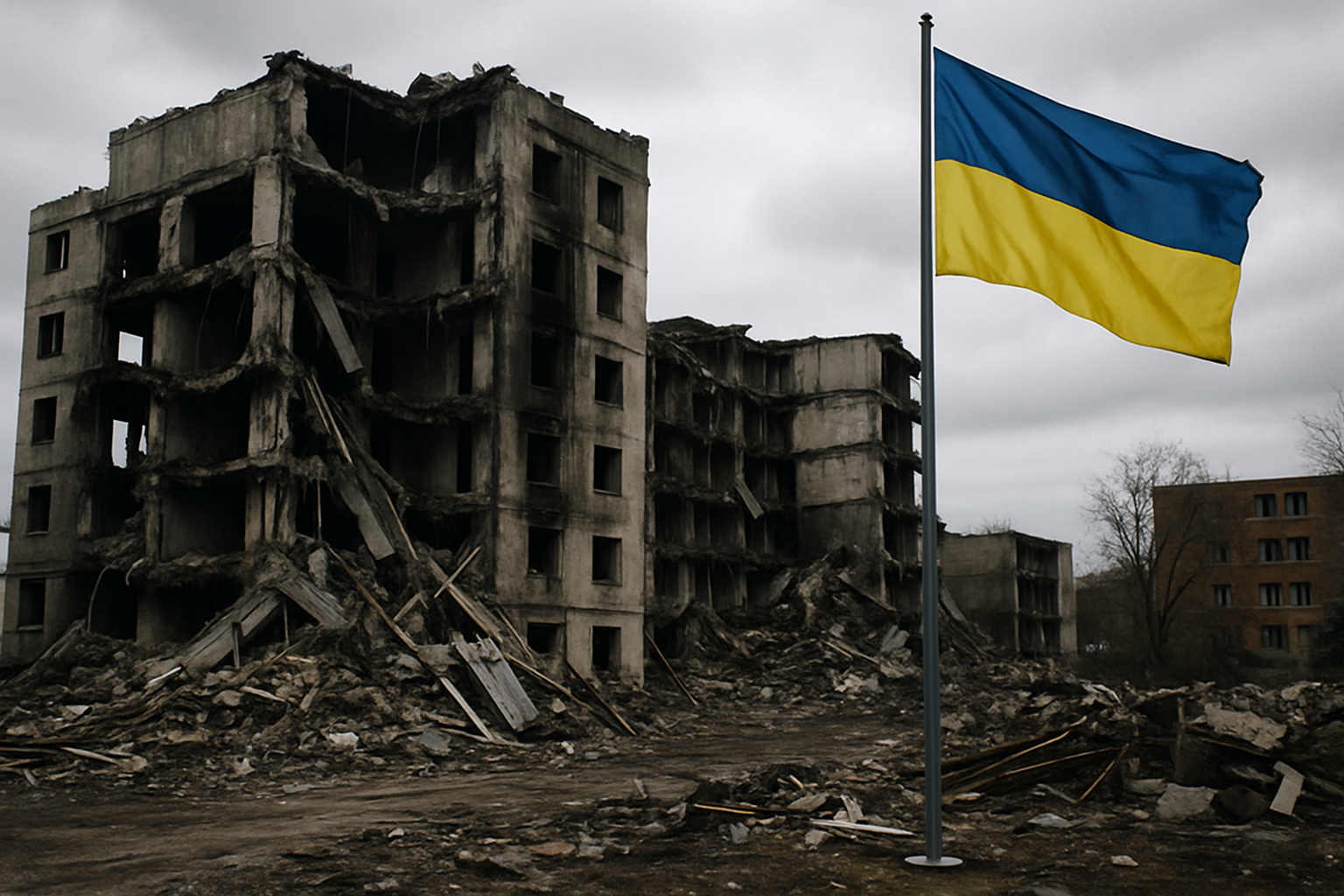
Nobel Peace Prize winner Dmitry Muratov has said Vladimir Putin can no longer credibly claim victory in Ukraine, arguing that Russia may be able to destroy the country but cannot conquer it.
In an exclusive interview with the BBC in Moscow, Muratov said the conflict, which began with Russia’s full-scale invasion in 2022, had become the bloodiest in Europe since the Second World War. He said that, regardless of how it ends, the scale of suffering meant it could not be regarded as a victory.
“There will never be ‘victory’,” Muratov said, referring to the war’s human cost. He said the current situation in Ukraine showed that continued escalation could cause destruction, including potentially through the use of nuclear weapons, but would not amount to conquest.
Muratov said he could not predict whether Putin would order the use of nuclear weapons, dismissing assertions by political commentators that they know what the Russian president is thinking. However, he said references to nuclear weapons had appeared more than 500 times since the beginning of the year in material he had studied, including on state television and at the St Petersburg International Economic Forum.
Press freedom and political prisoners
The journalist also described the continuing pressure on independent media and critics of the Russian authorities. Muratov co-founded Novaya Gazeta more than three decades ago, and the newspaper became known for investigations into human rights abuses and high-level corruption.
He said the paper no longer operates in print after its registration was revoked and its printing presses were nationalised under a decree issued by Putin. Novaya Gazeta retains an online presence, he said, but its website has been blocked in Russia and can be accessed only from abroad or through virtual private networks.
Muratov, who shared the 2021 Nobel Peace Prize for efforts to safeguard freedom of expression, said many public figures had been designated “foreign agents”, “extremists” or “terrorists”. He estimated that at least 1,500 people had been imprisoned since the start of what Russia calls its “special military operation” after speaking against state policy, while acknowledging that figures vary.
He highlighted the cases of journalists Antonina Favorskaya, Konstantin Gabov, Sergey Karelin and Artyom Kriger, who were convicted on extremism charges and jailed for five and a half years. He also referred to Alexei Gorinov, a city councillor imprisoned after speaking against the war, and pianist Pavel Kushnir, who died in a pre-trial detention centre during a hunger strike after being arrested over anti-war videos.
Muratov himself has been labelled a “foreign agent” in Russia, a designation he said limits rights and is intended to stigmatise critics. Despite the restrictions, he said he and his colleagues continue to receive quiet expressions of support from people in Moscow.
Source: BBC News
