
Close Menu
Mano blog

    Subscribe to Updates

    Get the latest creative news from FooBar about art, design and business.

    What's Hot

    US Judge Orders Donald Trump to Face Oath Questioning in BBC Defamation Suit

    22 spalio, 2026

    Australian Police Investigate Reality TV Show Following Complaint Over Inappropriate Content

    22 spalio, 2026

    Arab Parties Positioned as Potential Deciding Factor in Israeli General Election

    22 spalio, 2026
    Facebook X (Twitter) Instagram
    Facebook X (Twitter) Instagram Vimeo
    Mano blog
    Subscribe Login
    • Home
    • Categories
      • Culture
      • Finance
      • Future
      • Health
      • History
      • Ideas
      • Innovations
      • Nature
      • Science
      • Society
      • Technology
      • World
      • Sports
    Mano blog
    • Home
    • Categories
    Home»Ideas»The idea of truth is getting harder to defend in the age of artificial media
    Ideas

    The idea of truth is getting harder to defend in the age of artificial media

    USERBy USER18 kovo, 2026Komentarų: 03 Mins Read
    Facebook Twitter Pinterest LinkedIn Tumblr WhatsApp VKontakte Email
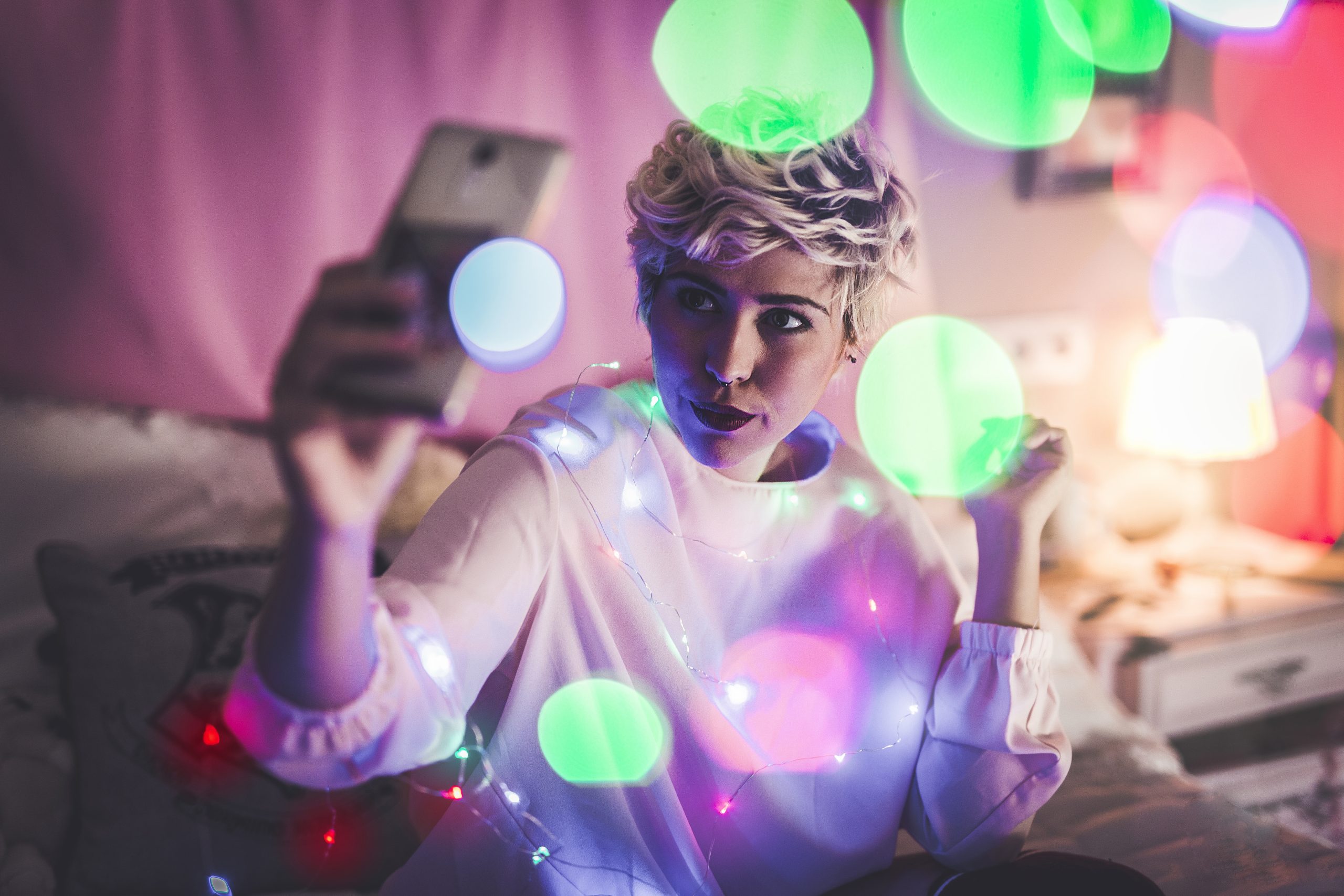
    A young female taking a selfie in her room with Christmas lights
    Share
    Facebook Twitter LinkedIn Pinterest Email

    For years, public debate about misinformation focused on false headlines, manipulated claims and bad actors spreading propaganda online. That now feels like an older, simpler problem. The deeper challenge emerging in 2026 is not just that falsehood travels quickly, but that the very boundary between authentic and artificial material is becoming harder for ordinary people to recognise. Recent reporting and analysis suggest the crisis of truth is shifting from one of content moderation to one of shared perception.

    The change is being driven in part by the spread of AI-generated imagery during moments of conflict and political tension. The Guardian wrote this month that fake images linked to Iran have circulated widely online, while real photographs have at times also been dismissed as synthetic. That inversion is especially destabilising. It means artificial media does not merely add false material to the information environment; it also weakens confidence in genuine evidence. Reuters Fact Check has likewise continued publishing debunks of AI-made images presented as real-world events, underlining how often fabricated visuals now enter public discourse during fast-moving news cycles.

    This creates a more serious democratic problem than a single hoax. In earlier phases of the misinformation debate, journalists and researchers could still appeal to a broadly accepted distinction between real and fake, even if some audiences rejected it. Now that distinction itself is under pressure. Once people become accustomed to the idea that any image might be generated, any video altered and any public figure impersonated, verification becomes slower, trust becomes thinner and bad-faith denial becomes easier. This is an inference drawn from the reporting on AI-generated war imagery and Reuters’ expanding fact-check coverage of synthetic content.

    The political implications are already visible. Reuters reported in February on a Chinese-linked influence operation targeting Japan’s elections, showing that digital manipulation remains tightly connected to strategic efforts to shape democratic outcomes. Synthetic media may not replace older forms of disinformation, but it makes them more potent by adding emotional force and visual plausibility.

    That helps explain why the idea of truth is becoming less about certainty and more about process. Truth in public life may increasingly depend on habits of verification, institutional credibility and media literacy rather than on the immediate persuasiveness of what people see on their screens. The problem is that such habits are slower than virality, less dramatic than spectacle and harder to sustain in exhausted, polarised societies.

    The result is not necessarily a world in which nobody believes anything. It may be worse than that: a world in which belief becomes tribal, evidence becomes negotiable and authenticity itself becomes politically contested. In that environment, defending truth is no longer just the job of journalists or platforms. It becomes a broader social task — one made more urgent by technologies that blur reality at the exact moment when democratic societies most need clarity.

    Share. Facebook Twitter Pinterest LinkedIn Tumblr WhatsApp Email
    Previous ArticleEurope’s ancient past is becoming a battleground over memory, ethics and ownership
    Next Article The idea of work is being rewritten by AI, but not in the way people were promised
    USER

    Related Posts

    The idea of certainty may be harder to maintain in the modern world

    13 gegužės, 2026

    The idea of success is becoming more personal

    13 gegužės, 2026

    The idea of intelligence is expanding beyond humans

    6 gegužės, 2026

    The idea of freedom is shifting from choice to capability

    6 gegužės, 2026
    Leave A Reply Cancel Reply

    Our Picks
    • Facebook
    • Twitter
    • Pinterest
    • Instagram
    • YouTube
    • Vimeo
    Don't Miss
    World

    US Judge Orders Donald Trump to Face Oath Questioning in BBC Defamation Suit

    By USER22 spalio, 20260

    A judge has ordered US President Donald Trump to answer questions under oath by December 11 in his Florida lawsuit against the BBC.

    Australian Police Investigate Reality TV Show Following Complaint Over Inappropriate Content

    22 spalio, 2026

    Arab Parties Positioned as Potential Deciding Factor in Israeli General Election

    22 spalio, 2026

    AI Discovery of Critical PHP Software Flaws Triggers Global Cyber-Security Response

    22 spalio, 2026

    Subscribe to Updates

    Get the latest creative news from SmartMag about art & design.

    Home
    Home

    Your source for the lifestyle news. This demo is crafted specifically to exhibit the use of the theme as a lifestyle site. Visit our main page for more demos.

    We're accepting new partnerships right now.

    Our Picks

    Putin cannot claim victory in Ukraine, Dmitry Muratov tells BBC

    13 rugpjūčio, 2026

    Ukraine says Russia mounted biggest energy infrastructure assault since spring

    30 rugsėjo, 2026

    Rising Living Costs Are Reshaping Daily Life as Communities Adapt to New Realities

    12 gruodžio, 2025
    New Comments

      Type above and press Enter to search. Press Esc to cancel.

      Sign In or Register

      Welcome Back!

      Login to your account below.

      Lost password?