

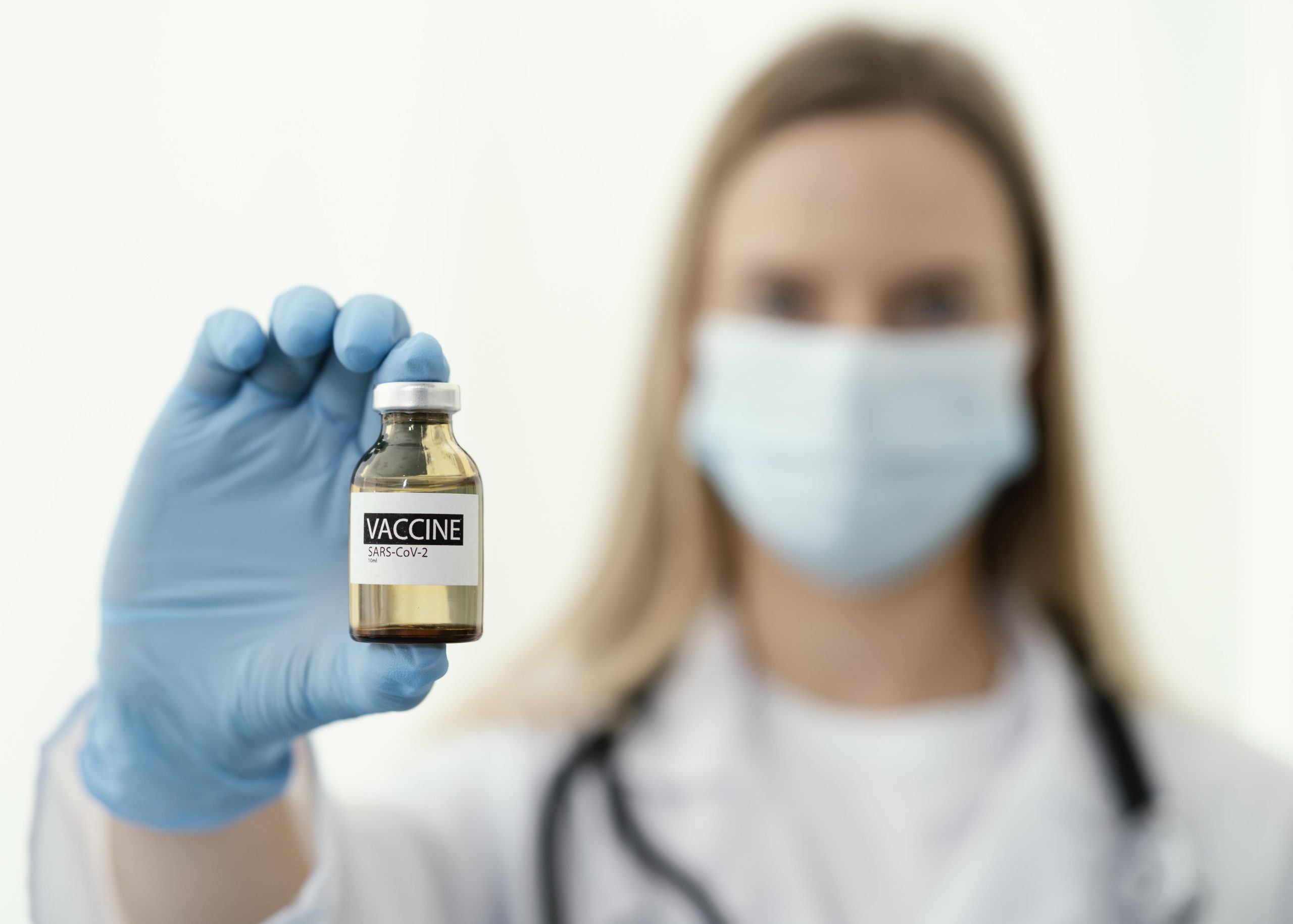
As the federal government prepares for the next meeting of the Advisory Committee on Immunization Practices, Health and Human Services Secretary Robert F. Kennedy Jr. has sharpened his criticism of aluminum-based vaccine components—ingredients widely used to strengthen the body’s immune response to vaccines.
Kennedy, who has a long history as an anti-vaccine advocate, argues that aluminum adjuvants are neurotoxic and linked to everything from autism and asthma to autoimmune disorders and food allergies.
But scientific consensus tells a different story. For example, one of the strongest modern recommendations—introducing peanut-containing foods early in infancy—has significantly reduced peanut allergy rates, directly contradicting the idea that vaccines are fueling a rise in allergies.
Since assuming office, Kennedy has ordered multiple reviews of vaccine ingredients, repeatedly singling out aluminum as a major concern. His advisory panel’s draft agenda includes a session on “adjuvants and contaminants.”
Recently, the Centers for Disease Control and Prevention also updated a long-standing webpage that previously stated unequivocally that vaccines do not cause autism. As of Nov. 19, the page now says that studies have not “definitively ruled out” a potential link.
Kennedy has also gone after scientists whose research demonstrates that aluminum adjuvants are safe. In August, he attacked a major Danish study that found no association between aluminum in vaccines and childhood disease, calling the research a “deceitful propaganda stunt” and urging the journal to retract it. The Annals of Internal Medicine dismissed his accusation and refused to retract the study.
Looking ahead to the upcoming advisory panel meeting, HHS spokesperson Emily Hilliard emphasized that ACIP “is independently reviewing the full body of evidence on adjuvants and other vaccine components to ensure the highest safety standards.”
The implications of Kennedy’s claims extend far beyond the debate over aluminum. Experts warn that casting doubt on aluminum adjuvants is part of a broader effort to undermine vaccine confidence and ultimately challenge the National Vaccine Injury Compensation Program—a system manufacturers say is essential for maintaining stable vaccine supply.
Yet across disciplines—infectious diseases, immunology, pediatrics, and epidemiology—experts agree: aluminum adjuvants are safe.
“Aluminum is the third most common element in the Earth’s crust,” said Dr. Paul Offit, pediatrician and director of the Vaccine Education Center at Children’s Hospital of Philadelphia. “We’re all exposed to it constantly. It’s in the water we drink and the food we eat.”
Vaccines add only a minimal amount of aluminum—roughly 8 milligrams total over the entire childhood schedule. In comparison, people naturally ingest around 400 milligrams through food and water by age 18.
Dr. Rajesh Gupta, a former FDA vaccine scientist, echoed this: “Aluminum is distributed throughout the body and ultimately excreted by the kidneys. It doesn’t accumulate.”
How aluminum adjuvants work
The aluminum used in vaccines is not metallic aluminum. It consists of aluminum salts—such as aluminum hydroxide or aluminum phosphate—that enhance the immune response.
It works much like zinc salts in cold remedies: these aren’t chunks of metal, but safe compounds.
When injected, aluminum salts create mild, temporary inflammation near the injection site. This draws immune cells to the area, allowing them to process the vaccine antigen and bring it to lymph nodes, where the immune system learns to recognize the pathogen. Dr. Harm HogenEsch of Purdue University noted that adjuvants must be injected alongside the vaccine antigen for this effect to occur.
Scientists acknowledge that any substance capable of boosting the immune system could theoretically enhance an allergic response. But they emphasize that vaccine antigens—such as hepatitis B or HPV proteins—are not allergens, and vaccines do not contain food proteins.
Animal experiments
Kennedy often cites animal studies to argue that aluminum can cause allergies. In these experiments, researchers intentionally sensitize mice by injecting them with a food protein mixed with aluminum. Aluminum alone does not trigger allergies.
“That’s the basis for many mouse models,” HogenEsch said. “But no food antigens are included in vaccines, so there’s no mechanism for this to happen.”
Dr. Ross Kedl of the University of Colorado put it bluntly: “To create a peanut allergy, someone would need to mix peanut proteins into the vaccine.”
Animal models often exaggerate allergic responses compared to humans, added Dr. Stefan Kaufmann of the Max Planck Institute. Rodents are simply easier to push into allergic states than people.
Human studies
Large-scale human research also shows no evidence of harm from aluminum adjuvants.
In 2023, a CDC-coordinated Vaccine Safety Datalink study found a slight increase in asthma among children with higher early-life aluminum exposure—but the association vanished once researchers accounted for breastfeeding.
“That paper should never have been published,” Offit said.
Dr. Kathy Edwards of Vanderbilt University noted that when researchers analyze vast datasets for many possible outcomes, statistical anomalies are inevitable. “Cherry-picking is a big part of RFK Jr.’s approach,” she said.
To further investigate, the CDC asked Danish epidemiologist Anders Hviid to replicate the findings. His team analyzed data from 1.2 million children over two decades and found no increased risk associated with aluminum exposure.
Known side effects
Aluminum adjuvants can cause one well-documented reaction: small, itchy bumps at the injection site called pruritic granulomas. They are extremely rare and harmless, and most clinicians never see a case.
These bumps represent a localized immune response—not the systemic allergic reactions caused by foods or insect stings. That distinction often gets lost in public discourse.
What happens if aluminum is removed
Experts warn that eliminating aluminum adjuvants would destabilize the entire vaccine system. Many vaccines—such as hepatitis B, HPV, and DTaP—depend on aluminum to work effectively.
Replacing aluminum with other adjuvants is not a simple swap. Modern vaccines build on one another: once a vaccine is proven effective, new versions are tested against the existing product, not a placebo. Removing aluminum would require reformulating core childhood vaccines and running massive new clinical trials, causing supply disruptions and leaving communities vulnerable.
“The aluminum adjuvants have hit the sweet spot of safety and effectiveness,” HogenEsch said. “Eliminating them would be reckless.”
A century of data
Vaccines containing aluminum adjuvants have been used for nearly 100 years, with no evidence linking them to systemic allergic disease.
“We’ve used aluminum adjuvants for decades,” Edwards said. “My grandchildren have received all their vaccines. I don’t worry about their safety.”
Experts caution that the real threat isn’t aluminum—it’s the potential drop in vaccination rates. Lower uptake would mean more measles outbreaks, more meningitis cases on college campuses, and more deaths from cancers preventable by HPV vaccines.
As Offit put it, “Choosing not to vaccinate isn’t a risk-free choice. It’s simply choosing a different risk.”
