

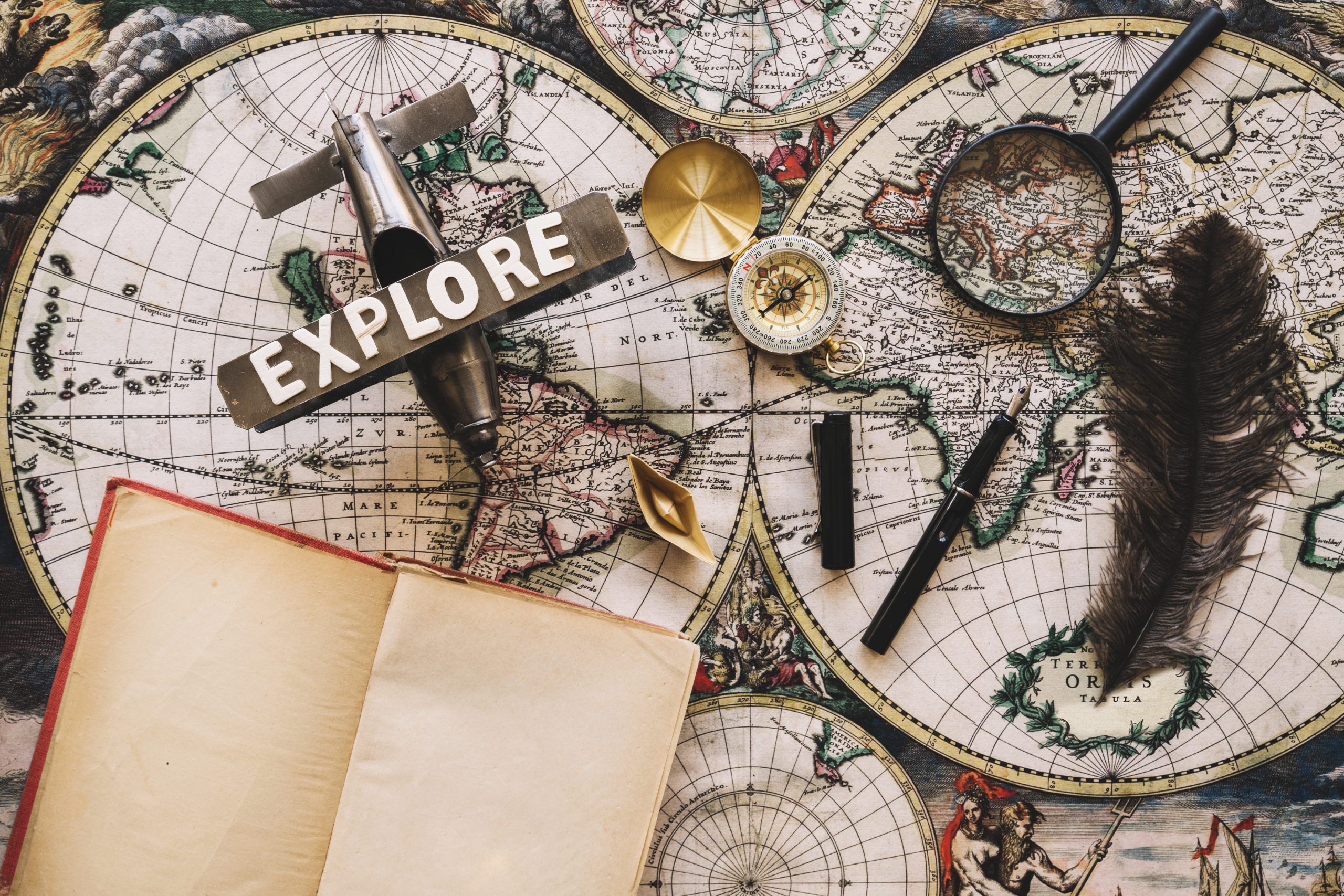
European explorers travelled across unfamiliar oceans, opening new trade routes and establishing contact between distant civilizations.
Advances in navigation and shipbuilding
Technological developments played a crucial role in enabling long-distance voyages. Improvements in ship design allowed vessels to travel farther and withstand harsh ocean conditions. Navigation instruments such as the astrolabe and compass helped sailors determine their position at sea.
These innovations made it possible for explorers like Christopher Columbus and Ferdinand Magellan to undertake journeys that expanded European knowledge of the world.
The creation of global trade networks
Exploration led to the development of new trade routes linking Europe, Asia, Africa and the Americas. Valuable goods such as spices, textiles, precious metals and agricultural products circulated across continents.
Countries including Portugal and Spain established powerful maritime empires based on overseas trade and colonial territories.
These networks formed the foundations of the modern global economy.
Cultural exchange and conflict
The Age of Exploration also brought significant cultural interaction. European travellers encountered diverse civilizations with different languages, religions and traditions.
However, exploration was often accompanied by conflict, colonisation and the spread of diseases that devastated indigenous populations in the Americas.
The historical consequences of these encounters continue to shape global societies today.
The beginning of globalization
The exploration era connected distant regions into a single global system. Goods, ideas and people moved across oceans more frequently than ever before.
Historians often view this period as the beginning of globalization—a process that continues to influence international trade, cultural exchange and political relations.
Lasting historical impact
Although exploration expanded geographical knowledge and economic opportunities, it also created complex legacies of colonialism and cultural transformation.
Understanding this period helps explain how modern global networks emerged from centuries of exploration and contact between civilizations.
