

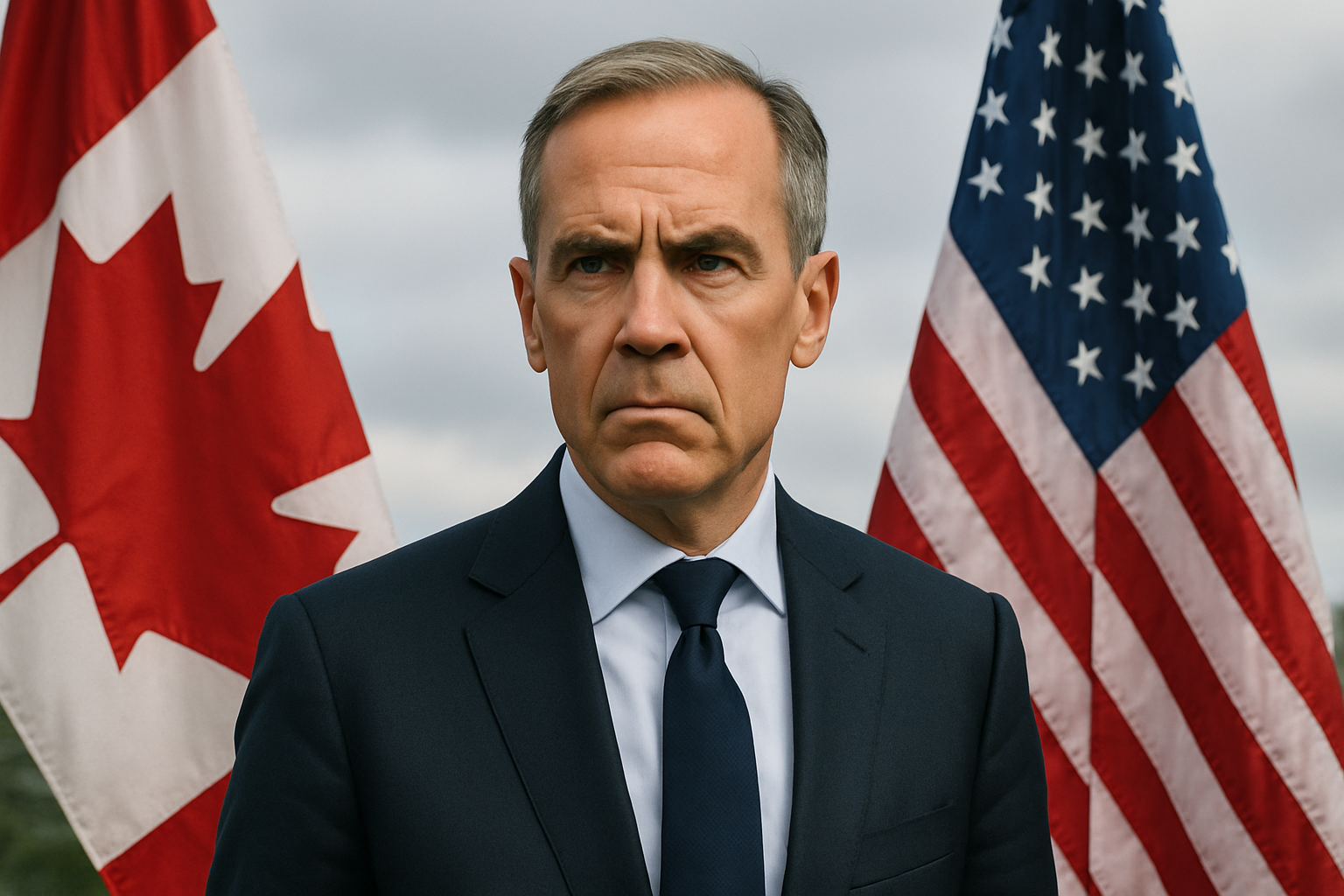
Canadian Prime Minister Mark Carney faces a major political test after suspending trade talks with the United States and choosing retaliation rather than accepting an interim agreement that had appeared close.
The breakdown has pushed the two longstanding allies into an escalating trade dispute, with no clear route back to an agreement. Carney is among the first world leaders described as walking away from negotiations with the White House, and the outcome will be closely watched as both countries face the effects of tariffs and counter-tariffs.
Carney said late proposals from the United States were “unfair, uneconomic, and called into question the reliability of any deal.” US Trade Representative Jamieson Greer, however, said Canada had introduced new demands and reversed other commitments. It remains unclear precisely what caused the negotiations to collapse in their final hours.
Economic pressure on both sides
Canada sends about 70% of its exports to the United States, leaving Canadian businesses exposed to US duties. The source also noted that Canada is the leading trading partner for several US states, including Michigan, Kentucky, Indiana and Ohio, meaning American businesses could also be affected by the dispute.
Carney came to power pledging an “elbows up” approach to pressure from the Trump administration. He must now persuade Canadians that the economic costs of resisting the US are justified by the prospect of securing better terms later.
Polling cited in the report suggests there is some appetite for a tougher response. An Abacus Data survey found about 36% of Canadians supported retaliation against US tariffs, while a Leger poll said 56% wanted the federal government to take a hard line without further concessions.
Canadian consumer actions have already affected some US sectors. A boycott of travel to the United States resulted in an estimated C$3.3bn loss in US travel revenue last year, according to the report. Provincial decisions to pull American alcohol from store shelves also coincided with a 78% year-on-year fall in US wine exports to Canada, valued at $357m. The US distillers association said exports of American spirits had declined by more than 70% because of the provincial restrictions.
Provincial and political backing
Carney is due to meet provincial leaders to brief them on the situation, including regions less directly affected by the dispute. Ontario Premier Doug Ford, whose province has a substantial manufacturing and vehicle sector, warned earlier that a deal reached under US pressure could encourage Washington to pursue further concessions.
After talks failed, Ford said he fully supported a strong response on a “tariff for tariff, dollar for dollar” basis. Conservative opposition leader Pierre Poilievre also backed Carney’s decision to step away for now, arguing that Canada could not accept one-sided tariffs that would harm its industrial base.
The next step depends in part on how President Donald Trump responds, while Canada weighs whether domestic support will hold as the trade conflict raises pressure on businesses and consumers on both sides of the border.
Source: BBC News
