

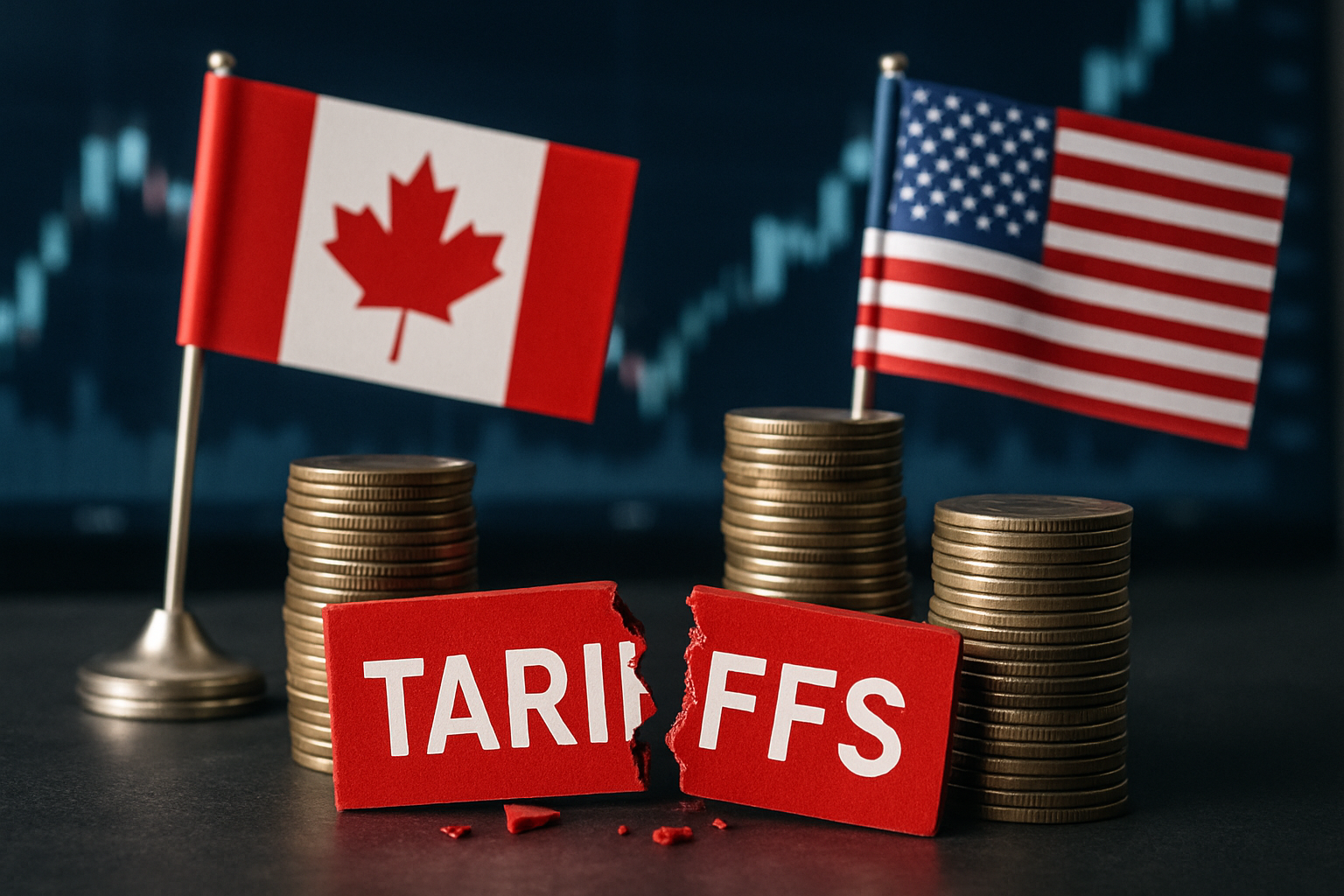
Canada has suspended trade negotiations with the United States and said it will respond “dollar for dollar” after new US tariffs on a broad range of Canadian imports took effect at midnight on Saturday.
The measures impose a 50% levy on nearly $20bn (C$28bn) of Canadian goods. They were introduced after talks aimed at reaching a last-minute agreement broke down on Friday evening.
Prime Minister Mark Carney said negotiators had made important progress since discussions began in July, but the outcome did not meet Canada’s objectives. He said the US had made late changes to its proposed terms that were “unfair, uneconomic, and called into question the reliability of any deal.” Carney said he had instructed Canada’s negotiators to return to Ottawa.
Tariffs follow collapsed negotiations
President Donald Trump had threatened to introduce the 50% tariffs by 19 August. Earlier in the week, he temporarily paused the measures while saying the two countries were close to an agreement that would be beneficial to both sides.
According to the reported terms under discussion, US tariffs on Canadian steel and aluminium could have been reduced from 50% to 25%, while duties on Canadian automobiles could have fallen from 25% to 15%. In return, Carney had asked Canadian provinces to put US alcohol back on store shelves.
The new tariffs, imposed under the Tariff Act of 1930, apply to products including wine, dairy, cement, clothing and hockey equipment. They are in addition to US tariffs already affecting Canadian steel, aluminium, vehicles and lumber.
US Trade Representative Jamieson Greer said Canada had declined to complete a deal under terms that he said had been agreed earlier in the week. Greer said the US had offered Canada the most favourable treatment available to a major exporter, but that Canadian demands and reversals of commitments had disrupted the balance reached in recent negotiations.
Pressure for a deal
Canada and the US have held intermittent negotiations for more than a year as Canada sought reductions or removals of tariffs in key sectors. The US has sought concessions including the removal of Canada’s remaining retaliatory tariffs on American vehicles, changes to dairy quotas to allow greater access for US cheese producers, and an end to provincial restrictions on US alcohol sales.
Ontario Premier Doug Ford backed Carney’s approach, calling for a “tariff for tariff, dollar for dollar” response. Businesses and trade groups on both sides of the border had urged the two governments to reach an agreement.
The US Chamber of Commerce said earlier this week that higher tariffs could harm both economies, increase costs for US families, disrupt supply chains and put at risk the 13 million US jobs it said depend on trade under the US-Mexico-Canada Trade Agreement.
An Abacus Data poll cited in the report found that about 36% of Canadians supported retaliation, while 30% preferred continued negotiations. Greer said last week that the US would not tolerate counter-tariffs and would take action in response.
Source: BBC News
