

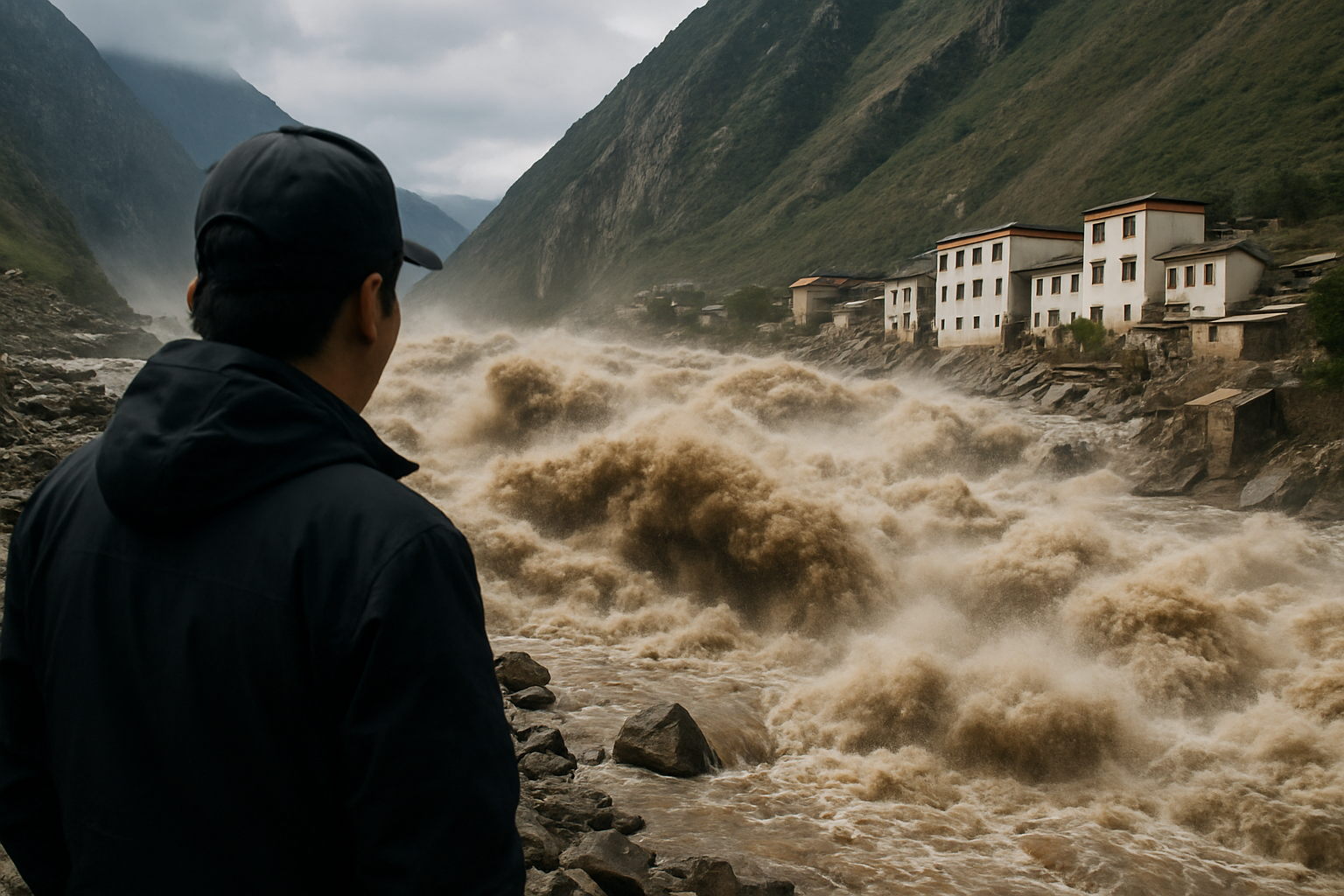
Footage showing a powerful flash flood sweeping through Gyirong Port, a major crossing between Nepal and Tibet, has circulated widely outside China, but has received little public exposure within the country, according to BBC reporting.
CCTV images showed water racing through the border area as people fled, with structures and other objects carried away by the torrent. China’s flagship state news bulletin has broadcast only one still image from the footage, while videos and posts describing the flooding have been difficult to locate on China’s censored internet.
The flooding, which began on Wednesday, has killed hundreds of people and left many others unaccounted for, the BBC reported. Chinese authorities have issued updates on rescue work and on a barrier lake considered at risk of overflowing, but limited information has emerged about the victims, survivors or the full impact inside Tibet.
Rescue operations continue
Beijing has deployed hundreds of emergency personnel to the affected area. President Xi Jinping chaired an emergency meeting with officials to co-ordinate the response, while Premier Li Qiang travelled to the region and was seen inspecting debris-clearance work.
State media footage released on Saturday showed rescue teams moving through terrain covered in mud and rocks as they called out for people who might be trapped. It remains unclear who rescuers were able to reach or save. Foreign journalists cannot travel to Tibet without government approval, adding to the difficulty of independently reporting from the affected area.
The International Campaign for Tibet praised first responders but said Chinese authorities had been removing videos and other first-hand material from social media. The organisation called on authorities to release what it described as complete and verifiable information on casualties and damage.
Concerns over access to information
The disaster has highlighted longstanding restrictions on communication and reporting in Tibet. Rights activists say people in the region can face detention or arrest for speaking with journalists or publishing material online that authorities view as conflicting with the official narrative. This has also made it difficult for Tibetans living outside the area to obtain information about relatives.
China says it does not violate Tibetans’ rights and has pointed to investment intended to expand tourism and integrate the region with the rest of the country. The BBC reported that local Communist Party officials urged members after the disaster to assist relief work, provide emotional support to residents and maintain social order and public confidence in affected areas.
Source: BBC News
