

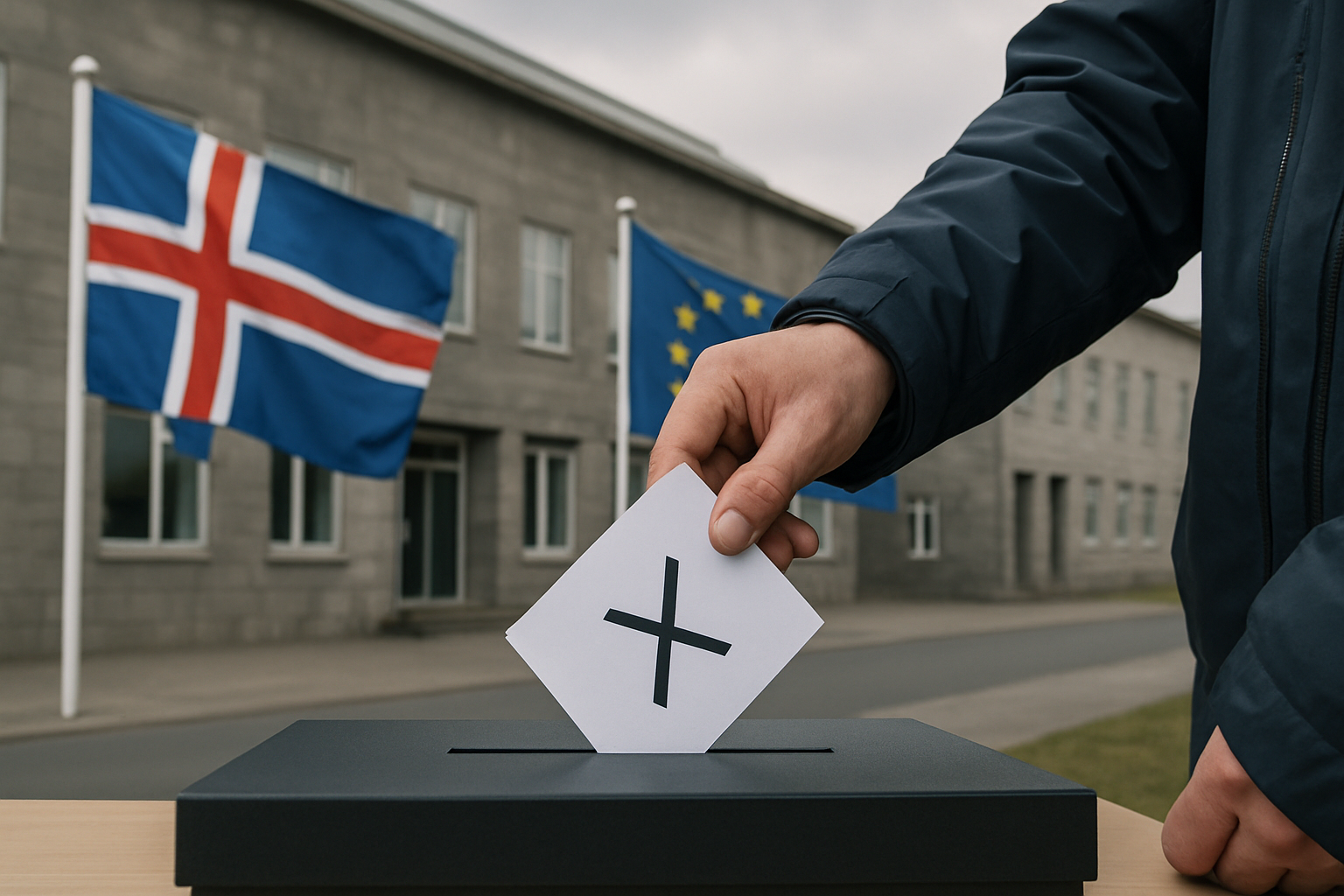
Icelandic voters have rejected a proposal to reopen negotiations on joining the European Union, 13 years after the country suspended its accession process.
Public broadcaster RUV reported that 52.8% of 225,031 voters opposed restarting talks, while 47.2% supported the proposal. The result represented a margin of about 12,600 votes.
Turnout was reported at 82.5%, the highest for an Icelandic election since 2009. About 270,000 people were eligible to vote in the country, which has a population of nearly 400,000.
Fishing concerns dominate debate
The referendum asked voters whether Iceland should resume accession negotiations with the EU. A vote in favour would not itself have meant joining the bloc; it would have begun a process toward an accession agreement that would then have required approval in a second referendum.
Although international security issues featured in the campaign, debate focused largely on fishing. Fish and marine industries account for almost 40% of Iceland’s exports, and opponents of restarting talks were concerned that EU common fisheries policy rules could reduce Icelandic control over valuable fishing grounds.
Iceland is already part of the EU single market and the Schengen border-free area. Full EU membership would also bring it into the customs union and, eventually, the euro.
Accession process remains on hold
Iceland applied to join the EU in 2009, following the financial crisis and the collapse of its banking system. Negotiations had progressed substantially when a eurosceptic government took office in 2013 and put them on hold. Fishing rights were a major obstacle at that time as well.
Prime Minister Kristrún Frostadóttir’s centre-left government had pledged to hold a referendum by 2027, but moved it forward amid international tensions, including concerns related to Russia’s maritime activity near Iceland and US President Donald Trump’s stated interest in Greenland.
Frostadóttir said after voting in Reykjavik that the campaign had prompted discussion about Iceland’s role in the world. The government would continue its work regardless of the result, she said. The No vote does not prevent Iceland from seeking to resume EU talks in the future.
Source: BBC News
