

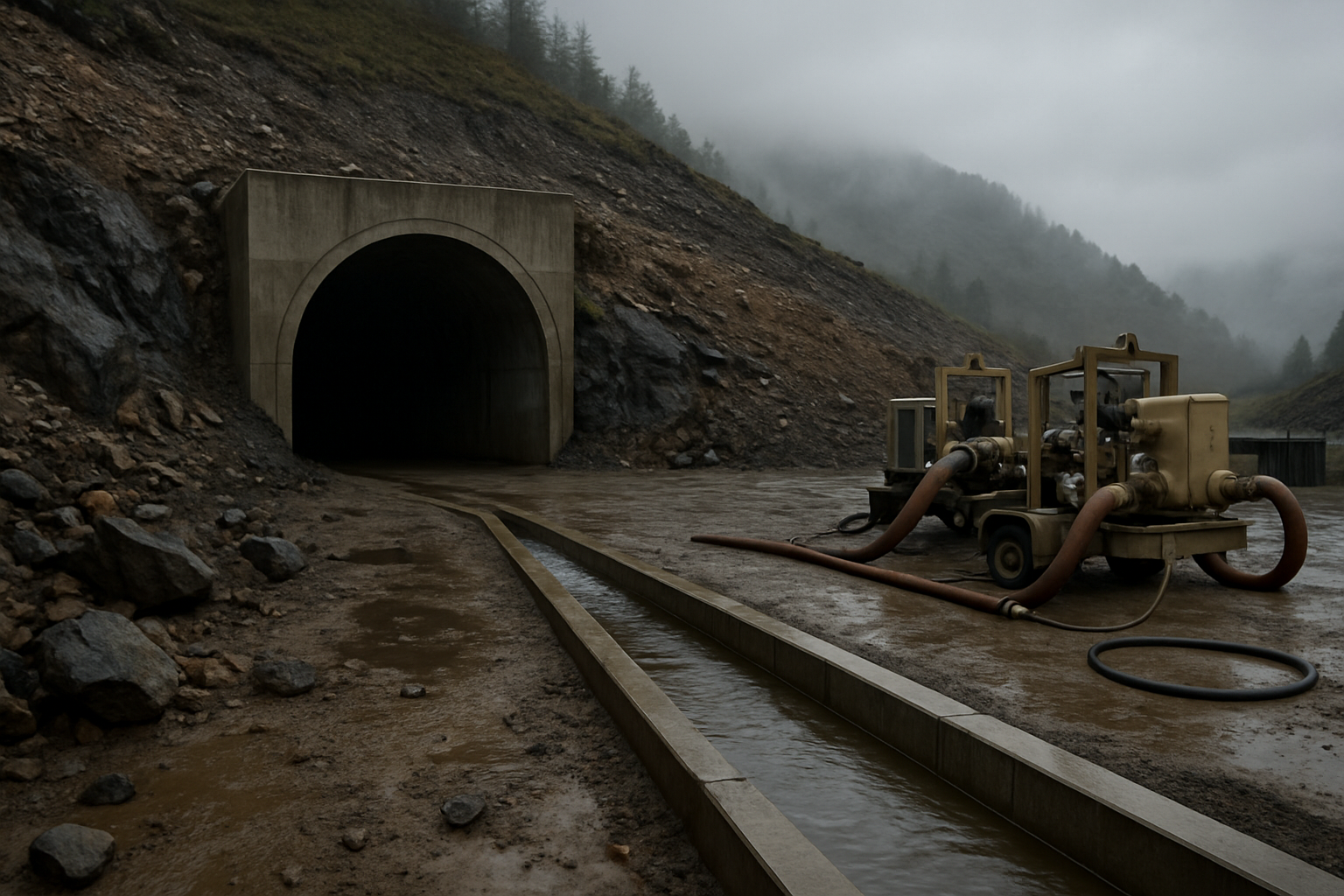
Rescuers in Nepal have pulled two men alive from a hydropower tunnel buried and blocked by a massive flash flood, after a complex operation involving mapping, excavation, controlled explosions and drainage work.
Sanjaya Shah and Kabir Maharjan were brought out early on Friday after rescue teams created a narrow passage through debris at the Trishuli 3A Hydropower Station tunnel. Dozens of people are still believed to be trapped inside, and efforts to reach them are continuing.
The station was among several facilities affected by last week’s flash flood on the Nepal-Tibet border. The disaster has killed 1,300 people so far, according to the report.
Finding a tunnel buried by debris
Arnold Dix, a tunnelling expert advising Nepal’s hydropower authorities, said the first major task was identifying the tunnel entrance after the flood transformed the landscape and buried it under an avalanche of debris.
Dix, president of the International Tunnelling and Underground Space Association, said his team used old topographic maps, post-disaster satellite imagery, helicopter video and surface features such as power poles to estimate the entrance’s position. Once it was found, rescuers still had to determine where the trapped workers might be within the tunnel.
The route was completely obstructed by mud and rocks, including boulders larger than cars. Rescuers used explosives to break through the blockage, despite the danger that blasting could harm people inside or compromise the tunnel. Dix credited the Nepalese army with carrying out the explosions precisely and without destabilising the structure.
Teams also encountered substantial water in the tunnel. Excavators and pumps were used to create trenches linking the tunnel to the river outside, allowing water to drain away before crews advanced further.
Work continues towards station
At the upper part of the blockage, rescuers dug a person-sized passage through the debris, using the original tunnel roof to form the top of the narrow route. Dix said this approach also reduced the risk of further flooding.
In the early hours of Friday, rescuers heard what they believed were voices. Local reports said the teams called out to those inside and received a faint response before Shah and Maharjan were extracted.
Dix estimated that crews had advanced about 60 metres from the entrance and still needed to cover another 150 metres to reach the hydropower station deeper inside the mountain. Rescuers hope flood debris did not reach the station, where people could face further risks from mud, rocks or flooding.
The operation remains hazardous, Dix said, because crews could encounter water ahead while also facing the possibility of another flood outside the tunnel. He said the successful recovery of two survivors had given the team confidence that it was moving in the right direction, towards an upper area of the station that may offer more space for people to survive.
Source: BBC News
