

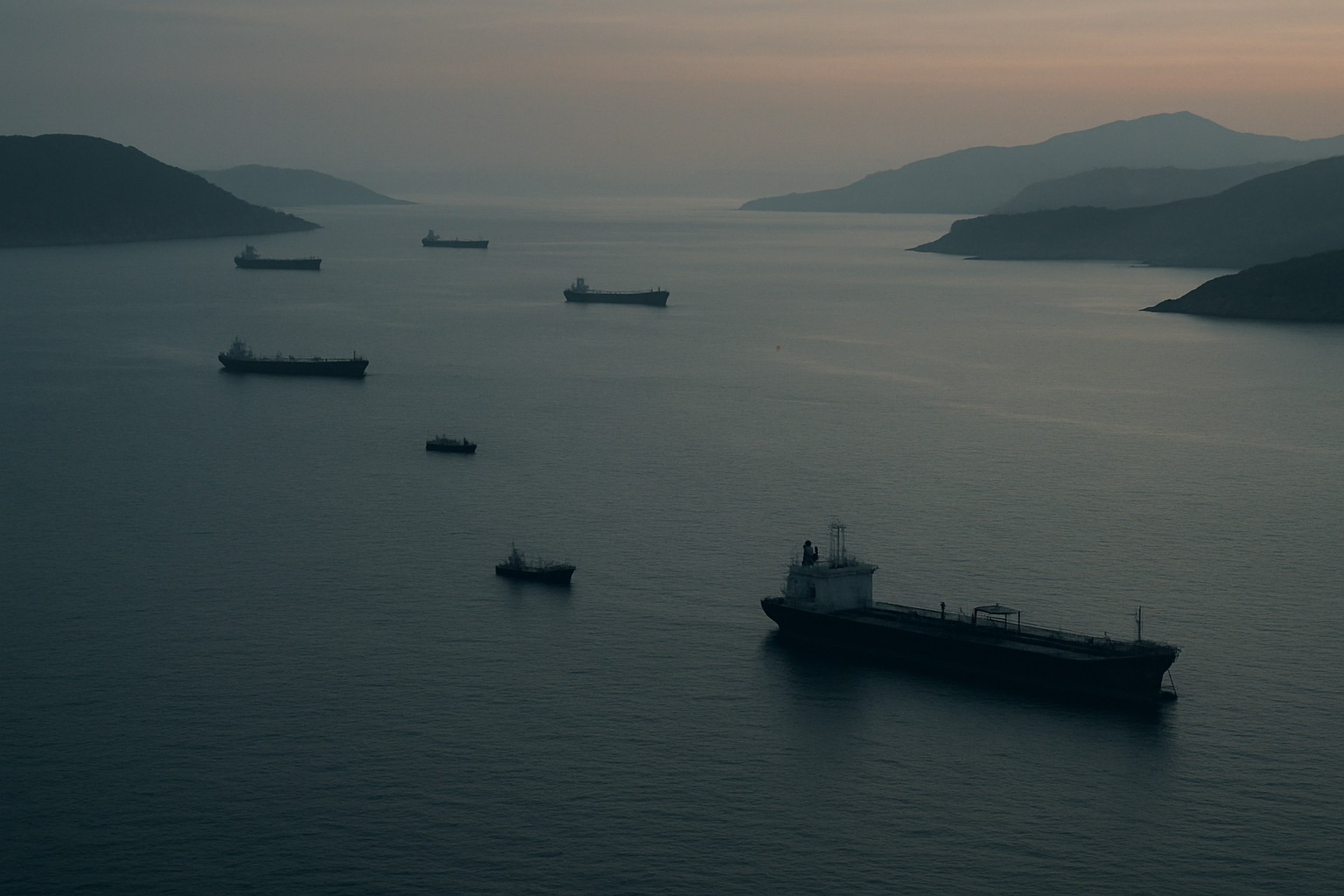
The United States military said it struck three Iran-linked oil tankers after ballistic missiles were launched toward two US Navy warships in the region.
US Central Command said it had permanently disabled one tanker near Kharg Island and another close to the Strait of Hormuz. A third tanker in the Gulf of Oman was completely destroyed, according to the command.
Centcom said the Islamic Revolutionary Guard Corps had launched multiple attacks targeting a US aircraft carrier and a guided-missile destroyer. It said the vessels successfully avoided the attacks and that no US personnel were harmed.
Iranian state media had earlier reported that one of the country’s tankers was hit off the coast of Kharg Island. Tehran did not immediately acknowledge the reported attacks on the US ships.
US warning to the IRGC
Admiral Brad Cooper, the commander of US Central Command, said the action was intended to impose a higher economic cost after the alleged targeting of the two US vessels. He said the US would defend its forces and could destroy what he described as Iran’s limited and exposed oil fleet if necessary.
Centcom alleged that the three tankers formed part of a multibillion-dollar shadow network used to finance the IRGC and its regional proxies.
The developments came nearly a week after renewed exchanges of attacks between the United States and Iran, following a period of relative calm. A 60-day ceasefire formally ended last month, and there has been little indication of a new diplomatic settlement.
Earlier in the week, US Vice-President JD Vance said the military was investigating Iranian claims that US strikes killed at least four people, including two children, at a wedding in southern Iran. The Iranian Red Crescent Society said missile shrapnel struck the gathering in Sirik, while Tehran called the incident a war crime.
The US and Israel began broad strikes on Iran on 28 February, according to the report. Iran subsequently targeted Israel, US bases and allied Gulf states, while the Strait of Hormuz was effectively closed to maritime traffic. The disruption has pushed up global energy prices and added pressure on President Donald Trump ahead of November’s US midterm elections.
Source: BBC News
