

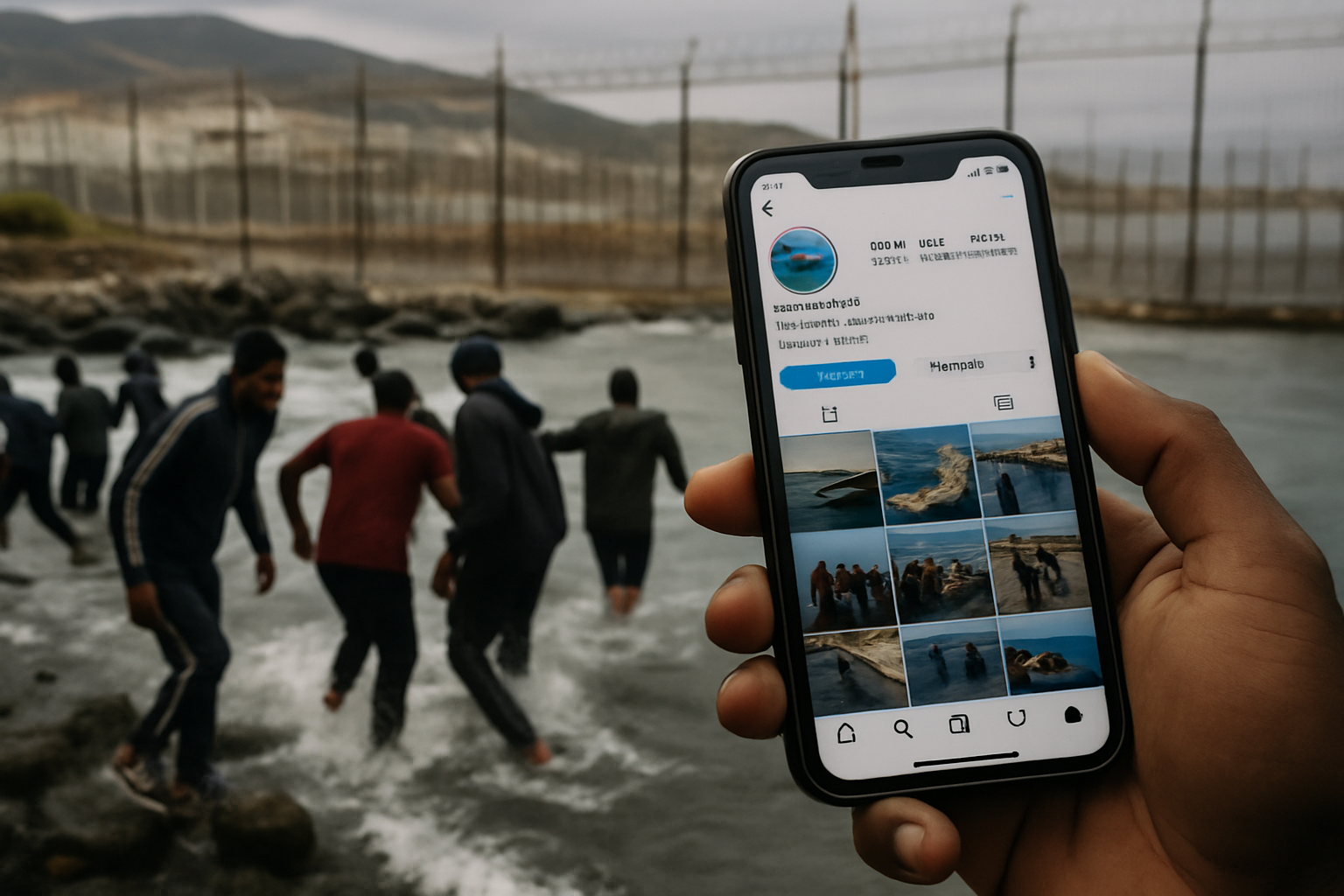
A network of Instagram accounts has been promoting crossings from Morocco to the Spanish enclave of Ceuta and, in some cases, offering paid advice to prospective migrants, according to a BBC investigation.
The BBC’s Top Comment podcast found dozens of interconnected profiles sharing videos that portray the route around the Morocco-Ceuta border fence as straightforward and safe. The investigation said the content can be misleading, as people have drowned while attempting the crossing and some migrants have taken longer routes.
Using a dummy Instagram account posing as a Moroccan man in his twenties, the BBC contacted several profiles. One account replied that it could help with a crossing planned for the weekend and requested 5,000 Moroccan dirhams, or about £400, in advance for information intended to help the person enter Ceuta.
The account said it had assisted many people previously and offered advice involving sewer pipes that it claimed could help someone reach the enclave safely. It asked for payment through a bank account using a named money-transfer service, but did not answer when asked whether money would be returned if the crossing failed. The account later deleted several messages sent to the dummy profile.
Misleading images and claims
The BBC said some accounts shared what it described as “mirage” content: posts presenting a version of Ceuta that differs from conditions faced by migrants. One widely circulated video showed two women in wetsuits walking through the city. The original Spanish post had urged migrants not to arrive, but some Moroccan and Arabic-language accounts removed or altered that context.
Other videos showed young people apparently enjoying time in the sea, while some posts highlighted people said to have reached Ceuta and then travelled onward to Spain or mainland Europe. However, the BBC reported that authorities returned about 75,000 of roughly 78,000 people who arrived in Ceuta by sea from Morocco in a matter of hours last month. The Mayor of Ceuta said 100 people died during the crisis.
Many of the accounts used variations of the word Haraga and included Ceuta in their names or handles, often alongside Spanish flags and Moroccan and Spanish calling codes. The BBC said account histories, posts and follower information suggested most were operated from Morocco, while a smaller number may have been based in Spain or Italy.
Platform response
The investigation found that interacting with the profiles and related posts led its dummy account to receive more material encouraging travel to Ceuta through Instagram’s recommendations. The BBC said some accounts directed users to shared WhatsApp numbers or email addresses, potentially expanding access to people seeking paid advice.
Several profiles were no longer available on Instagram after the BBC contacted Meta, the platform’s owner. Meta told the broadcaster it had a team monitoring the situation in Ceuta in real time and removing material that breaches its policies, including content offering, facilitating or seeking human-smuggling services.
The BBC said posts promoting another crossing attempt this weekend were still being actively recommended on Instagram, raising concerns about further deaths and renewed tensions between Morocco and Spain.
Source: BBC News
